

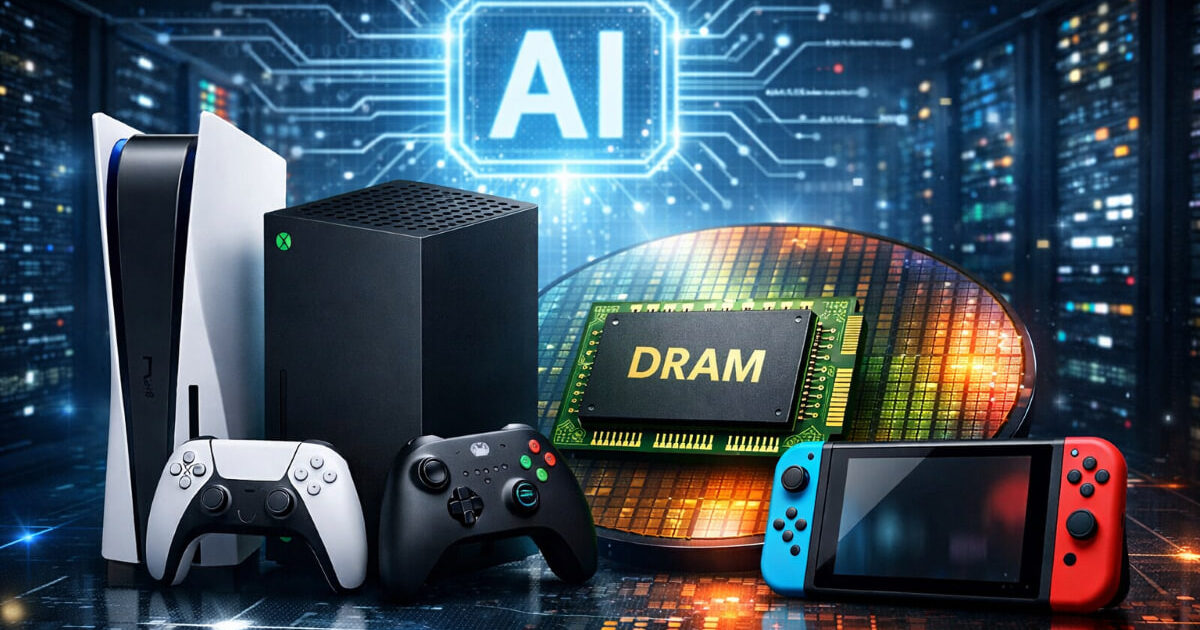
The artificial intelligence infrastructure buildout is creating an unexpected casualty: the video game console market. As tech giants race to expand their AI data centers, they’re consuming vast quantities of memory chips, leaving manufacturers of consumer electronics scrambling for supply. Gaming console makers including Sony, Microsoft, and Nintendo now face a perfect storm of rising component costs and dwindling availability that could reshape the industry through 2026.
According to Reuters, the surge in demand for dynamic random-access memory (DRAM) from AI applications is fundamentally altering the semiconductor supply chain. Memory manufacturers are making a calculated choice, prioritizing lucrative data center contracts over traditional consumer electronics customers. The consequences for gamers could be significant.
The Great Memory Reallocation
DRAM chips serve as essential components in gaming systems, from Sony’s PlayStation 5 to Microsoft’s Xbox Series X and Nintendo’s upcoming Switch 2. These chips provide the fast, temporary storage that enables smooth gameplay and quick system responsiveness. Without adequate DRAM supply, console production slows or becomes prohibitively expensive.
Micron Technology, one of the world’s largest memory manufacturers, has already signaled this shift in priorities. The company recently announced it would discontinue its Crucial brand, which has long served consumer markets. This decision represents more than a simple product line adjustment. It reflects a fundamental reorientation of the memory industry toward higher-margin customers willing to pay premium prices for guaranteed supply.
AI data centers fit that profile perfectly. These facilities require massive quantities of specialized high-bandwidth memory to train large language models and run inference workloads. More importantly, tech companies building AI infrastructure have demonstrated willingness to pay whatever it takes to secure components. That’s a compelling value proposition for memory manufacturers facing finite production capacity.
Console Prices Face Double-Digit Increases
Industry analysts studying the situation warn that memory costs represent a substantial portion of total console hardware expenses. As DRAM prices climb, manufacturers face difficult choices about absorbing costs or passing them to consumers.
Current projections suggest console prices could rise 10% to 15% over the next one to two years. Gaming PCs, which typically use more expensive and varied memory configurations, could see price increases approaching 30%. These figures come from analysts tracking component costs and supply chain dynamics.
The timing couldn’t be worse for console makers. The Xbox Series X currently retails around $650, while Sony’s PlayStation 5 Pro commands prices near $750. Additional cost pressures on already-expensive hardware could further dampen consumer enthusiasm. Many potential buyers are already grappling with tariff-related price increases and broader economic uncertainty affecting discretionary spending.
Sales Collapse Signals Deeper Problems
The market is already showing signs of stress. According to Circana, a market research firm tracking consumer spending, gaming hardware expenditures plummeted 27% last month compared to the same period a year earlier. Even more alarming, unit sales reached their weakest level since 1995, a particularly troubling comparison given how much the gaming market has expanded over the past three decades.
Market research firm TrendForce has responded to these trends by slashing its growth forecasts. The firm initially projected 9.7% growth for the console market in 2025 but has now revised that figure down to just 5.8%. Looking further ahead, TrendForce expects the market to actually contract in 2026, representing a significant reversal from earlier optimistic projections.
These downgrades reflect not just current weakness but concerns about sustained headwinds. Memory prices show little sign of moderating as AI infrastructure investment continues accelerating. Meanwhile, consumer budgets remain stretched, and the console installed base is already quite large, reducing the pool of potential new buyers.
Device Launches May Face Delays
Rising component costs create another challenge beyond pricing: they complicate launch strategies for new hardware. Console makers typically plan device releases years in advance, locking in specifications, negotiating component contracts, and building marketing campaigns. Sudden cost increases can upend these carefully orchestrated plans.
Analysts tracking the industry suggest manufacturers may choose to delay upcoming releases rather than launch products into unfavorable market conditions. Releasing an expensive new console during a downturn risks weak sales, negative reviews focusing on price, and long-term brand damage.
Valve, the company behind the Steam platform and Steam Deck handheld, reportedly plans to launch a more powerful “Steam Machine” console next year. Industry observers now question whether that timeline remains realistic given current market conditions. Valve has delayed hardware launches before when circumstances didn’t align with its goals, and the company has the financial flexibility to wait for better timing.
Nintendo faces similar considerations with its Switch 2, though the company has built substantial goodwill and a large install base eager to upgrade. Sony and Microsoft, meanwhile, are likely years away from their next major console generations, giving them time to assess whether market conditions improve.
The Broader AI Impact on Consumer Electronics
The console industry’s struggles illustrate how AI infrastructure investment is rippling through the entire technology sector. The same supply constraints affecting gaming systems also impact smartphones, laptops, and other consumer devices that rely on DRAM and other semiconductors.
This represents a significant shift in how semiconductor supply chains operate. Historically, consumer electronics represented the largest and most important market for chip manufacturers. Now, data center customers are assuming that role, and they’re willing to pay premium prices for priority access to cutting-edge components.
The transition raises questions about the long-term health of consumer electronics markets. If memory manufacturers permanently deprioritize these customers in favor of enterprise buyers, consumer device makers may face chronic supply constraints and inflated costs. That could slow innovation, reduce product variety, and ultimately limit consumer choice.
Outlook: Extended Pressure Through 2026
Industry analysts expect these dynamics to persist well into 2026. AI infrastructure investment shows no signs of slowing, with major tech companies continuing to announce massive data center buildouts. Memory manufacturers are responding by expanding production capacity, but new fabrication facilities take years to come online.
For gaming console makers, this suggests an extended period of difficult market conditions. They’ll need to find ways to manage costs, potentially through design changes that reduce memory requirements or by negotiating long-term supply contracts that lock in more favorable pricing. Alternatively, they may need to accept lower profit margins or higher prices that could suppress demand.
The situation serves as a reminder that technology markets are deeply interconnected. The AI boom that’s generating excitement in some sectors is creating significant challenges in others. How console makers navigate this transition will likely influence the gaming industry’s trajectory for years to come.