

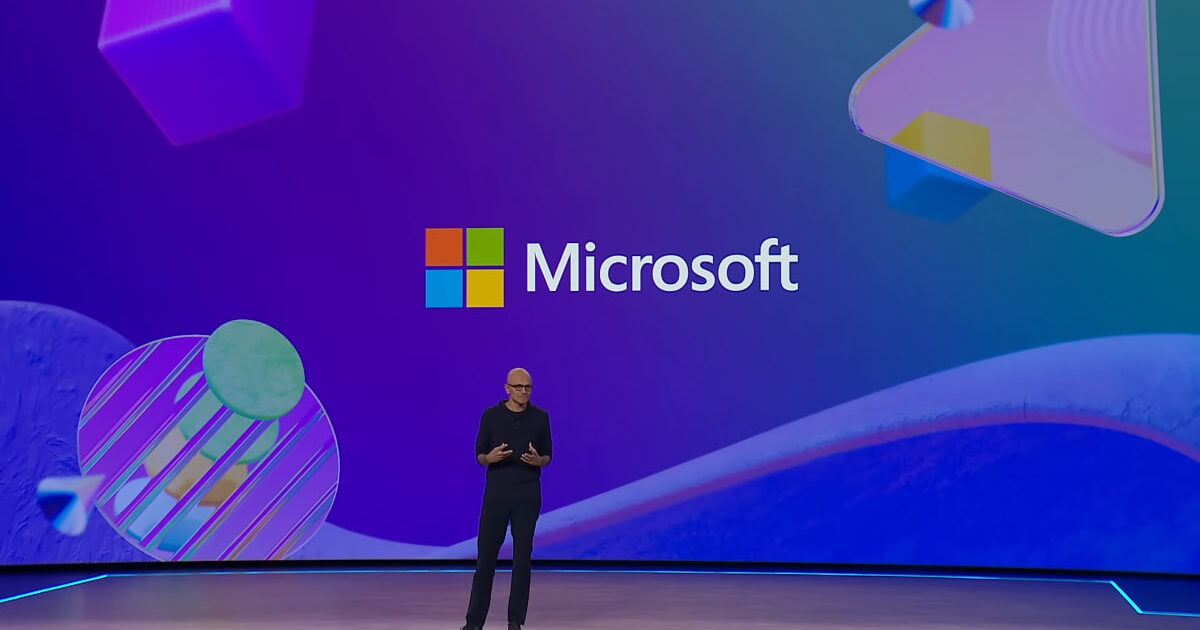
Artificial intelligence has reached a critical inflection point, according to Microsoft CEO Satya Nadella, but the bottleneck preventing broader impact isn’t technological capability. Instead, Nadella argues that humans simply haven’t learned how to effectively use the powerful AI systems already at their disposal. In a recent blog post, the Microsoft chief outlined his vision for AI’s next phase, declaring the discovery period over and widespread adoption beginning.
The “Model Overhang” Phenomenon
Nadella’s perspective challenges prevailing narratives about AI limitations and introduces concepts like “model overhang” to explain the gap between AI’s theoretical capabilities and practical applications. His comments arrive as technology leaders grapple with questions about whether AI development has plateaued or whether current systems remain dramatically underutilized.
Nadella introduces the concept of “model overhang,” describing a scenario where already-trained AI models contain latent capabilities that remain locked until users discover how to access them. This perspective suggests that current AI systems are more powerful than most applications demonstrate, with the limitation residing in human understanding rather than algorithmic constraints.
According to Nadella, unlocking these dormant capabilities could involve developing new prompting techniques, applying fine-tuning to specific domains, or simply identifying the right use cases where AI’s strengths align with genuine needs. This framing shifts responsibility from AI developers to users and application designers who must learn to extract value from existing systems.
The model overhang concept aligns with observations from OpenAI, which Nadella references in arguing that the public “massively underestimates” current AI capabilities. While many people still perceive AI primarily as chatbots or enhanced search engines, these systems can allegedly handle complex tasks that previously required expert-level human effort and hours of work.
Whether this characterization accurately represents AI’s current state remains debatable. Critics might argue that if AI capabilities are so profound yet so poorly understood, the responsibility falls on developers to create more intuitive interfaces and clearer guidance rather than blaming users for failing to discover hidden potential.
Moving Beyond the “AI Slop” Debate
Nadella explicitly calls for moving past what he terms the “slop vs sophistication” debate. The “AI slop” phenomenon refers to low-quality, often pointless AI-generated content flooding the internet, from generic blog posts to formulaic social media content that adds little value to human knowledge or experience.
Rather than continuing to argue about whether AI produces valuable output or meaningless noise, Nadella advocates for evolving Steve Jobs’ famous “bicycle for the mind” metaphor. Jobs used this phrase to describe personal computers as tools that amplified human cognitive capabilities, much as bicycles amplify physical transportation efficiency.
Nadella suggests we should conceptualize AI as “scaffolding for human potential,” a framework that supports and enhances human capabilities rather than replacing them or generating autonomous output of questionable value. This framing attempts to reposition AI as fundamentally about human augmentation rather than automation or substitution.
Taking the argument further, Nadella proposes that society needs a new “theory of mind” that accounts for how humans relate to each other when everyone has access to cognitive amplifiers. This philosophical question extends beyond individual AI use to explore how widespread AI adoption might reshape social dynamics, professional relationships, and collaborative work.
“This is the product design question we need to debate and answer,” Nadella writes, suggesting that resolving these conceptual challenges is essential for responsible AI deployment rather than merely technical or regulatory concerns.
From Individual Models to Complex Systems
Looking toward 2026, Nadella predicts the AI industry will shift focus from individual model performance to designing complex systems that coordinate multiple components. Rather than relying on single large language models to handle all tasks, developers will increasingly build architectures that orchestrate multiple specialized models and AI agents.
These systems will manage memory across interactions, implement sophisticated access controls, and enable secure tool usage while maintaining appropriate boundaries. This architectural shift reflects growing recognition that single models, regardless of size or training data, cannot reliably handle the full range of requirements for production deployment.
Microsoft itself has moved in this direction with its Copilot products, which combine large language models with retrieval systems, task-specific tools, and guardrails designed to prevent inappropriate outputs or security breaches. The company’s experience deploying AI across enterprise environments has presumably informed Nadella’s perspective on what’s required for reliable real-world performance.
The systems approach also acknowledges what Nadella calls the “jagged edges” of AI models—their unpredictable combination of surprising capabilities in some areas and unexpected failures in others. By building systems that route tasks to appropriate components and implement verification checks, developers can work around these inconsistencies rather than waiting for models to achieve uniform reliability.
Resource Constraints and Strategic Decisions
Nadella emphasizes that successfully scaling AI requires smart allocation of scarce resources including energy, computing power, and specialized talent. These constraints have become increasingly apparent as AI training and deployment costs have escalated dramatically.
Energy consumption for AI data centers has emerged as a significant concern, with some estimates suggesting that training and running large language models consumes electricity comparable to small cities. Microsoft’s investments in nuclear power and renewable energy reflect attempts to secure sustainable energy sources for expanding AI infrastructure.
Computing power remains concentrated among a handful of technology giants with resources to build massive data centers filled with specialized AI chips. This concentration raises questions about competitive dynamics and whether smaller companies can meaningfully participate in AI development without access to comparable infrastructure.
Specialized AI talent, from researchers to engineers to product managers who understand both technical capabilities and practical applications, represents another bottleneck. Universities are expanding AI programs, but demand currently far exceeds supply for experienced professionals.
Nadella’s acknowledgment of these resource constraints suggests that AI’s next phase will involve difficult tradeoffs about where to deploy limited capabilities rather than unlimited expansion across all possible applications.
Tackling Real-World Challenges
For AI to gain broader acceptance and deliver on its promise, Nadella argues it must address specific challenges facing “people and planet.” This framing positions AI as a tool for solving pressing problems rather than merely an impressive technology seeking applications.
Potential areas where AI could make meaningful contributions include climate modeling and mitigation strategies, healthcare diagnosis and treatment planning, educational personalization, scientific research acceleration, and infrastructure optimization. However, Nadella acknowledges that discovering and implementing these applications will be “a messy process” rather than a smooth trajectory.
This messiness reflects the gap between AI’s capabilities in controlled environments and the complexity of real-world deployment. Systems that perform impressively on benchmarks often struggle with edge cases, unexpected inputs, or environments that differ from training data. Building reliable AI applications requires extensive testing, iteration, and refinement beyond initial model training.
Separating Spectacle from Substance
Nadella characterizes the current moment as one where AI’s discovery phase has ended and widespread adoption is beginning. This transition enables clearer distinction between “spectacle” and “substance”—between impressive demonstrations that may or may not translate to practical value and applications that deliver measurable benefits.
The AI industry has certainly produced its share of spectacle, from viral chatbot conversations to stunning image generations to ambitious predictions about artificial general intelligence timelines. As the technology matures, attention increasingly turns to ROI, productivity metrics, and concrete use cases rather than novelty and potential.
For enterprise customers, this shift is particularly important. Companies evaluating AI investments need to move beyond excitement about capabilities to rigorous assessment of whether specific implementations will improve operations, reduce costs, or create new revenue opportunities.
Criticism and Alternative Perspectives
Nadella’s framing that AI’s problem is user education rather than capability limitations invites skepticism. Critics might argue this perspective conveniently shifts responsibility from AI developers to users, obscuring genuine limitations in current systems.
If AI models truly possess powerful capabilities that remain hidden due to poor prompting or application design, one could argue that developers should create better interfaces, clearer documentation, and more intuitive interactions rather than expecting users to discover optimal approaches through trial and error.
Additionally, the “model overhang” concept may underestimate how much AI capabilities depend on specific training data and task formulations. Models that excel at certain benchmarks often fail at structurally similar problems presented differently, suggesting that latent capabilities may be more limited than Nadella’s framing implies.
The call to move beyond the “AI slop” debate may also be premature. Low-quality AI-generated content represents a genuine concern affecting information ecosystems, search engine utility, and content credibility. Dismissing these issues as distractions from AI’s potential risks overlooking real harms that require solutions.
What 2026 May Bring
Nadella’s predictions about 2026 emphasizing complex systems over individual models, resource optimization, and practical problem-solving applications provide a roadmap for where Microsoft and potentially the broader AI industry are heading.
Whether this vision materializes depends on multiple factors beyond any single company’s control: regulatory developments, competitive dynamics, technological breakthroughs or setbacks, and most importantly, whether practical AI applications deliver sufficient value to justify continued investment.
For Microsoft specifically, the company has bet heavily on AI integration across its product portfolio, from Office applications to cloud services to developer tools. Nadella’s perspective reflects both genuine beliefs about technology trajectory and strategic positioning for Microsoft’s AI-centric business strategy.
As 2026 unfolds, the gap between AI’s theoretical capabilities and practical impact will become increasingly clear. Whether Nadella’s diagnosis—that the problem is user education rather than technology limitations—proves accurate will significantly influence how the AI industry evolves and what role these systems ultimately play in economy and society.