

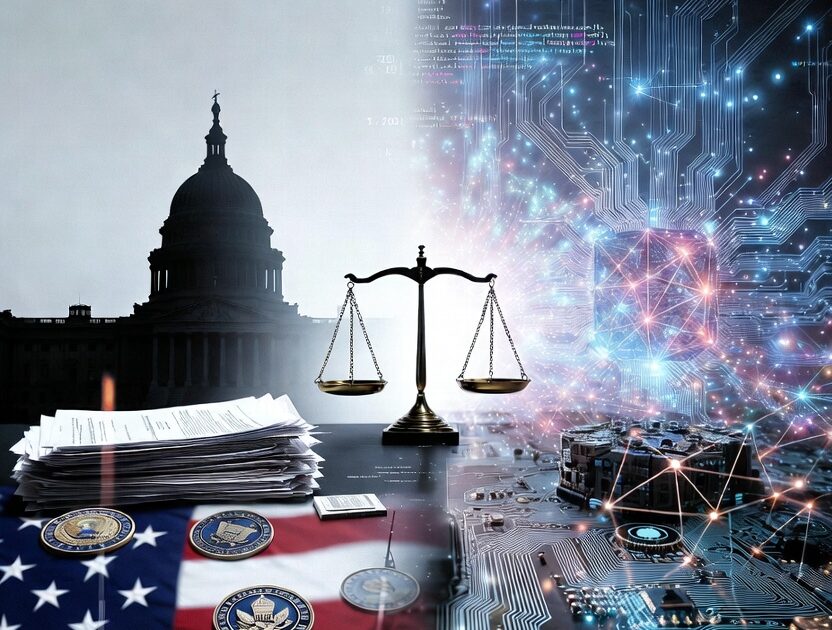
President Trump’s emerging technology policy framework favors minimal regulatory intervention, generating substantial discussion about potential consequences. The administration signals preference for industry self-governance over government mandates.
This approach contrasts sharply with regulatory trajectories in Europe and other jurisdictions pursuing comprehensive oversight frameworks. Stakeholders across technology, civil society, and government sectors weigh competing priorities between innovation velocity and risk management.
Deregulatory Philosophy
The administration’s position reflects broader conservative principles favoring market solutions over government intervention. Technology sector representatives have advocated lighter regulatory burdens, arguing excessive rules stifle innovation and disadvantage American companies against international competitors.
Industry leaders contend that algorithmic systems evolve too rapidly for traditional regulatory processes. By the time agencies draft rules, conduct comment periods, and finalize requirements, technology has already advanced beyond the regulatory scope. This temporal mismatch makes traditional oversight ineffective, they argue.
According to statements from White House technology advisors, the administration believes competitive markets naturally discipline harmful practices. Companies face reputational and financial consequences for deploying systems that harm consumers or violate rights. Market forces thus provide accountability without regulatory overhead.
Contrasting International Approaches
European Union regulators pursue comprehensive frameworks addressing algorithmic transparency, bias mitigation, and accountability mechanisms. The EU’s approach categorizes systems by risk level, imposing stricter requirements on high-risk applications in healthcare, employment, law enforcement, and other sensitive domains.
China combines promotion of domestic technology development with state oversight ensuring alignment with government priorities. Regulators there maintain authority to intervene in private sector technology deployment when systems conflict with social stability or political objectives.
The Organization for Economic Cooperation and Development has attempted coordinating international principles, but member states adopt varying implementation strategies. This fragmentation creates compliance challenges for multinational technology companies navigating different regulatory environments.
Areas of Concern
Critics identify several domains where lighter regulation might produce negative outcomes. Bias in hiring, lending, and criminal justice systems represents a significant worry. Algorithmic decision-making can perpetuate or amplify existing discrimination if unchecked. Without oversight requirements, companies lack incentives to audit systems for fairness.
Privacy implications also generate discussion. Systems processing personal information at scale create surveillance capabilities and data security risks. Self-regulation has historically failed to protect consumer privacy adequately, critics note, pointing to repeated high-profile breaches and unauthorized data sharing.
Misinformation and synthetic media pose additional challenges. Generated content that mimics authentic material can manipulate public opinion, facilitate fraud, or damage reputations. Some observers argue regulation should require disclosure when content originates from automated systems rather than humans.
National security considerations emerge around critical infrastructure and dual-use technologies. Systems developed for commercial purposes might be repurposed for weapons, surveillance, or cyberattack capabilities. Export controls and security reviews could address these risks, but light-touch approaches might leave gaps.
Industry Perspectives
Technology companies generally welcome reduced regulatory burdens. Compliance costs consume resources that could fund research and development. Simplified regulatory environments accelerate deployment timelines, potentially benefiting consumers through faster access to useful tools.
Startups particularly appreciate lighter oversight. New entrants typically lack the legal and compliance infrastructure that established companies maintain. Burdensome regulations create barriers favoring incumbents over innovative challengers.
However, some industry voices express concern about complete deregulation. Responsible companies investing in safety measures face competitive disadvantages against rivals cutting corners. Minimum standards create level playing fields where ethical practices don’t handicap market performance.
Civil Society Reactions
Consumer advocacy organizations typically favor stronger oversight. They argue market discipline proves insufficient for protecting public interests. Companies prioritize shareholder returns over societal welfare when these conflict. Regulation ensures consideration of broader impacts beyond profit maximization.
Civil rights groups worry about algorithmic discrimination. Historical patterns show technology can encode and automate bias. Proactive regulation requiring fairness testing and transparency helps prevent harm before it occurs rather than attempting remediation after damage is done.
Academic researchers studying technology impacts generally recommend balanced approaches. Some regulation addresses clear risks while avoiding excessive restrictions on beneficial innovation. Finding appropriate equilibrium requires ongoing adjustment as technology and its applications evolve.
Congressional Dynamics
Legislative branch engagement with technology policy remains limited despite growing recognition of the issues’ importance. Members of Congress face challenges understanding technical complexities while balancing constituent interests, industry lobbying, and public safety concerns.
Bipartisan support exists for some regulatory concepts, but consensus fractures around implementation details. Privacy legislation has stalled for years despite broad agreement on basic principles. Similar dynamics might affect other technology governance areas.
Executive authority to regulate without congressional action depends on existing statutory frameworks. Agencies interpret their mandates to cover emerging technologies, but legal challenges test whether old laws apply to new contexts. This uncertainty complicates regulatory development regardless of administration philosophy.
Economic Competitiveness Arguments
Proponents of lighter regulation emphasize global competition for technology leadership. China invests heavily in algorithm development while maintaining different governance priorities than Western democracies. Some argue excessive regulation allows authoritarian states to dominate economically and technologically important sectors.
American companies currently lead many technology domains. Preserving this advantage requires avoiding self-imposed handicaps through overregulation, according to this view. International standards eventually follow leaders’ practices, giving frontrunners influence over global norms.
Critics counter that this logic creates races to the bottom where jurisdictions compete by offering the weakest protections. Responsible governance should not sacrifice safety or rights for marginal competitive advantages. Long-term competitiveness depends on public trust, which requires demonstrating commitment to beneficial deployment.
State-Level Action
Individual states have begun developing their own technology regulations in the absence of federal frameworks. California, for example, pursues privacy protections and algorithmic accountability measures exceeding federal baseline. Other states consider similar initiatives.
This fragmented approach creates compliance complexity for companies operating nationally. Multiple state regimes with varying requirements increase costs and legal risks. Industry generally prefers uniform federal standards to patchwork state laws.
However, state experimentation also enables policy innovation. Different approaches can be tested and evaluated before national adoption. States serve as laboratories for regulatory strategies, providing evidence about what works in practice.
Future Trajectory
The administration’s deregulatory stance will likely face ongoing challenges from multiple directions. Congress might assert authority over technology governance regardless of executive preferences. Courts will resolve disputes about agency powers and constitutional limitations. State actions will proceed independently of federal policy.
Public opinion about appropriate oversight continues evolving as people experience both benefits and harms from algorithmic systems. High-profile failures or scandals could shift sentiment toward demanding stronger protections. Conversely, visible innovation successes might validate lighter-touch approaches.
International developments will influence American policy regardless of domestic preferences. Companies operating globally must comply with strictest applicable regulations. This reality might encourage voluntary adoption of higher standards even in permissive jurisdictions.
Balancing Innovation and Protection
Technology governance inherently involves tradeoffs between competing values. Innovation produces economic growth and quality-of-life improvements. Protections prevent harms and ensure equitable access to benefits. Neither absolute maximizes social welfare.
Finding optimal balances requires ongoing deliberation incorporating diverse perspectives. Industry expertise, academic research, civil society advocacy, and democratic processes all contribute to informed decision-making. No single stakeholder possesses complete information or perfectly aligned incentives with public interest.
The debate over regulation levels reflects fundamental questions about technology’s role in society, appropriate distribution of decision-making authority, and mechanisms for ensuring accountability. These discussions will continue shaping policy for years regardless of specific administrations or political contexts.