

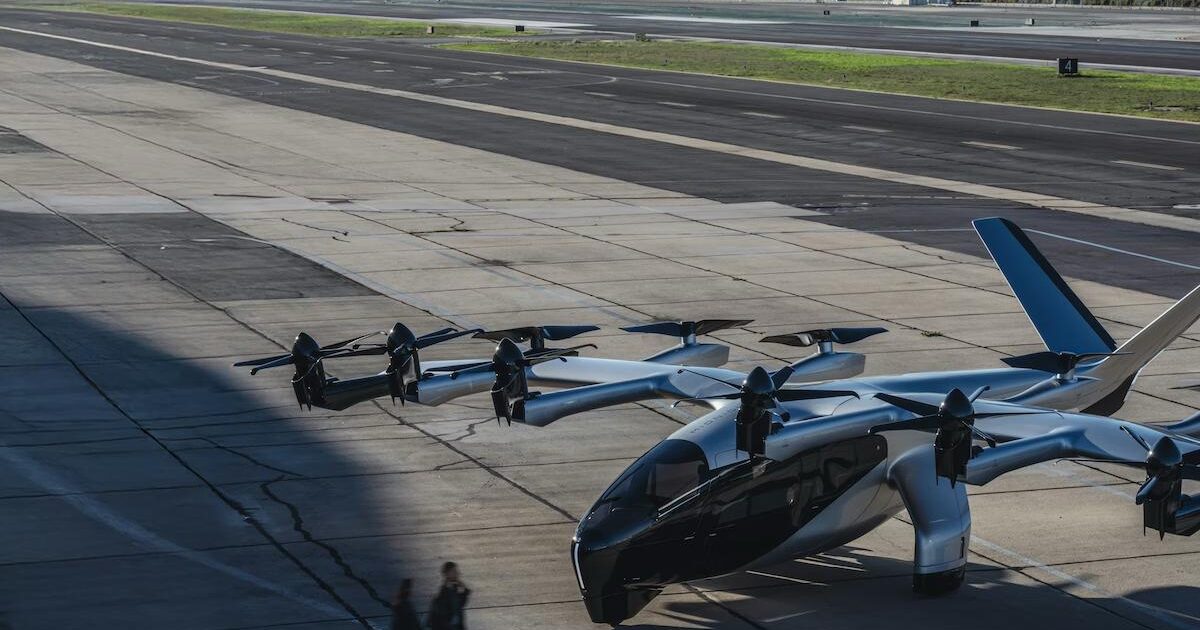
Archer Aviation has announced a strategic partnership with Nvidia to develop next-generation artificial intelligence systems for its electric air taxi aircraft, marking a significant step toward autonomous urban aviation. The collaboration, revealed at CES 2026 in Las Vegas, will integrate Nvidia’s IGX Thor computing platform into Archer’s aircraft to power advanced safety features, airspace navigation, and future autonomous flight capabilities.
IGX Thor Brings Industrial-Grade AI to Aviation
The partnership positions aviation as a critical application domain for what Nvidia calls “Physical AI,” systems that must understand and interact with the real world in safety-critical environments. Archer plans to showcase the integration at its recently acquired Hawthorne Airport in central Los Angeles, which will serve as both an operational hub for its planned LA air taxi network and a testing ground for AI-powered aviation technologies.
Nvidia’s IGX Thor platform represents the company’s most powerful safety-capable AI computing module, specifically designed for high-reliability, real-time onboard computing in environments where failures could have catastrophic consequences. The platform supports advanced perception systems, real-time decision-making, and predictive operations while meeting the stringent safety standards required for aviation applications.
Unlike consumer AI systems that can tolerate occasional errors, aviation computing must operate with exceptional reliability under demanding conditions including vibration, temperature extremes, and electromagnetic interference. IGX Thor’s architecture addresses these requirements while providing sufficient computational power to run sophisticated AI models for perception and planning.
The companies have been collaborating since early 2025, with Archer planning to integrate IGX Thor into future iterations of its aircraft programs. This extended development timeline reflects the complexity of aviation systems and the rigorous testing required before new technologies can be certified for flight.
Three Pillars of AI Integration
Archer’s AI strategy focuses on three core areas that address current aviation challenges while building toward future autonomous capabilities:
Enhanced Pilot Safety and Predictive Awareness: Leveraging Nvidia’s high-throughput edge computing, the system will sense the environment and process flight-path data in real time, providing pilots with earlier, clearer, and more actionable insights. This could include warnings about weather conditions, obstacles, or potential conflicts with other aircraft well before they become critical.
Seamless Airspace Integration: The partnership aims to develop AI systems that modernize current airspace management, allowing aircraft to safely navigate today’s complex airspace. This includes improved routing logic and dynamic traffic-aware flight planning that adapts to changing conditions. Current air traffic control systems were designed for conventional aircraft and may struggle to accommodate thousands of electric air taxis operating in urban environments.
Autonomy-Ready Flight Controls: By pairing IGX Thor with Archer’s proprietary avionics and control software, the companies are building a computing architecture capable of supporting future autonomous and semi-autonomous operations. While initial deployments will have human pilots, the underlying systems are being designed with eventual autonomy in mind.
Hawthorne Airport as AI Testing Ground
Archer Aviation’s acquisition of Hawthorne Airport provides a controlled environment for developing and validating AI systems before broader deployment. Located in central Los Angeles, the facility will serve dual purposes as both an operational hub for commercial air taxi service and a dedicated testbed for next-generation aviation technologies.
Using a working airport for AI development offers advantages over pure simulation or testing at isolated facilities. Archer can validate systems in realistic operational contexts while maintaining safety through controlled test protocols. This approach mirrors how autonomous vehicle companies have used dedicated test tracks and controlled urban environments to develop their technologies.
The Los Angeles location proves strategic given the region’s notorious traffic congestion, which creates strong economic incentives for alternative transportation modes. If air taxis can offer time savings that justify their premium pricing, dense urban markets like LA represent the most promising initial deployment opportunities.
Industry Context and Competitive Landscape
Archer operates in an increasingly crowded urban air mobility sector that includes competitors like Joby Aviation, Volocopter, and Lilium, all developing electric vertical takeoff and landing (eVTOL) aircraft. While these companies focus primarily on aircraft design and manufacturing, the Nvidia partnership positions Archer as emphasizing advanced AI capabilities as a differentiator.
The aviation industry has traditionally been conservative about adopting new technologies due to safety concerns and strict regulatory requirements. However, companies across the sector are exploring AI applications for everything from predictive maintenance to flight optimization to eventual autonomous operations.
Traditional aviation giants including Boeing and Airbus are also investing in AI and autonomy, though primarily for cargo operations and military applications rather than urban air taxis. Meanwhile, regulatory bodies like the Federal Aviation Administration are developing frameworks for certifying autonomous aircraft systems, though the timeline for passenger-carrying autonomous aircraft remains uncertain.
Safety Certification Challenges Ahead
Integrating AI into aviation systems introduces complex certification challenges that Archer and Nvidia will need to navigate with regulators. The FAA and international aviation authorities have established processes for certifying traditional avionics, but AI systems that learn from data and may behave unpredictably pose novel questions.
Key certification issues include demonstrating that AI systems behave reliably across all possible scenarios they might encounter, proving that systems degrade gracefully when components fail, ensuring that humans can effectively supervise AI decision-making, and validating that training data adequately represents real-world conditions.
Archer’s focus on pilot assistance features before full autonomy represents a pragmatic path through this regulatory complexity. By deploying AI first for situational awareness and decision support while humans retain control authority, the company can gain operational experience and build regulator confidence before pursuing higher levels of automation.
Manufacturing and Operations Applications
Beyond aircraft flight systems, Archer plans to apply Nvidia’s AI capabilities across its broader operations including manufacturing, fleet management, and pilot training. These applications may prove easier to implement than flight-critical systems since they don’t face the same safety certification requirements.
In manufacturing, AI can optimize production processes, predict equipment maintenance needs, and perform quality inspections with greater consistency than manual methods. For fleet operations, AI can analyze flight data to improve route planning, predict component failures before they occur, and optimize aircraft positioning to meet demand.
Pilot training represents another promising AI application. Sophisticated simulation environments powered by IGX Thor could provide more realistic training scenarios than current flight simulators, helping pilots develop skills for handling rare but critical situations.
Economic Viability Questions
While Archer’s technology ambitions are clear, fundamental questions remain about air taxi economics. Operating costs for eVTOL aircraft are still being established, and it’s uncertain whether enough customers will pay premium prices to make services profitable.
Battery technology limits current eVTOL range to roughly 60 miles, constraining possible routes. Recharging infrastructure must be built at vertiports. Noise concerns may limit where aircraft can operate. And regulatory approval processes could take years, delaying revenue generation while development costs accumulate.
AI integration adds both costs and potential savings to this equation. The sophisticated computing systems increase aircraft complexity and expense. However, if AI enables autonomous operations, eliminating pilot costs could dramatically improve economics. The technology might also reduce accidents and improve operational efficiency in ways that offset its expense.
Timeline and Expectations
Archer’s announcement that IGX Thor integration is “already well underway” suggests the partnership has progressed beyond initial exploration into active development. However, the company provides no specific timeline for when AI-enhanced aircraft will enter service.
Given aviation’s typical development and certification timelines, expecting AI-powered commercial operations within the next few years seems optimistic. More likely, initial deployments will come in the late 2020s, with autonomous capabilities following years later if technical and regulatory challenges can be resolved.
Adam Goldstein, Archer’s founder and CEO, framed the partnership as foundational: “NVIDIA’s AI compute capabilities and software stack give us the foundation to accelerate toward safer, smarter aircraft systems and modernize how aviation interfaces with the world’s airspace.”
Broader Implications for Aviation
The Archer-Nvidia partnership represents one example of how AI is entering aviation through new market entrants rather than established aerospace companies. Unencumbered by legacy systems and traditional industry approaches, startups like Archer can design aircraft and operations around AI from the beginning rather than retrofitting technology into existing platforms.
If successful, this approach could accelerate aviation’s digital transformation and pressure traditional manufacturers to move faster on their own AI initiatives. Alternatively, if Archer and similar companies struggle with certification or economics, it may validate the established industry’s more cautious approach.
For Nvidia, aviation represents another high-value market for its computing platforms beyond autonomous vehicles and robotics. The company’s strategy of providing comprehensive hardware and software stacks positions it to capture significant value as physical AI applications expand across industries.
Whether Archer’s AI-powered air taxis become a common sight over Los Angeles or remain an ambitious experiment will depend on successfully navigating technical, regulatory, and economic challenges that have grounded many previous urban aviation visions. The Nvidia partnership provides powerful tools, but tools alone don’t guarantee success in aviation’s demanding environment.