

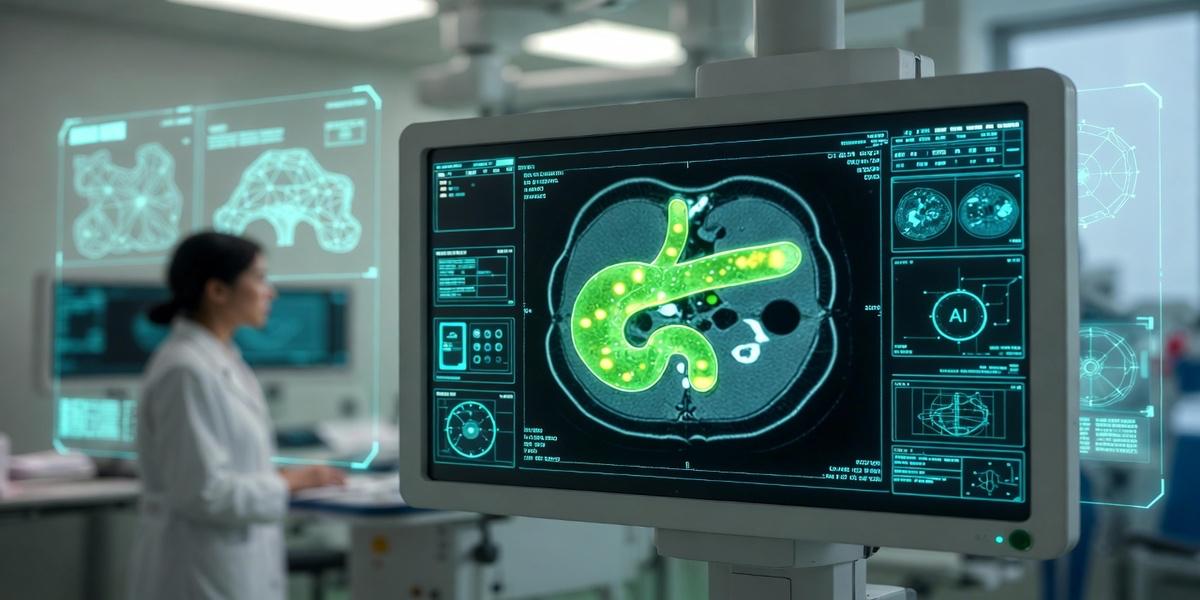
An artificial intelligence system in China is successfully detecting pancreatic cancer cases that physicians might otherwise overlook during routine examinations.
Pancreatic cancer ranks among the deadliest malignancies, with five-year survival rates below 10% in most countries. Early detection remains the primary challenge, as symptoms often appear only after the disease has progressed to advanced stages. Traditional diagnostic methods struggle to identify the cancer in its earliest, most treatable phases. The AI system addresses this gap by analyzing medical imaging with precision that complements human expertise, catching subtle indicators that might escape even experienced radiologists.
Technology Behind the Detection System
The AI platform analyzes CT scans and other medical images using deep learning algorithms trained on thousands of pancreatic cancer cases. These algorithms identify patterns and abnormalities too subtle for human eyes to detect consistently. The system examines factors including pancreatic duct dilation, small lesions, and tissue density changes that may indicate malignancy.
Chinese hospitals have integrated the technology into their diagnostic workflows, allowing radiologists to use AI-generated findings as a second opinion. This approach reduces the likelihood of missed diagnoses while maintaining physician oversight. The system flags suspicious cases for additional review rather than replacing human judgment entirely.
Performance metrics show promising results. Early trials indicate the AI detects pancreatic cancer at rates exceeding standard screening protocols, particularly for stage 1 and stage 2 tumors when treatment options remain most effective. Detection at these earlier stages significantly improves patient outcomes and survival probabilities.
Clinical Impact and Implementation
Several major hospitals across China have adopted the AI diagnostic tool, incorporating it into standard screening procedures for high-risk patients. These include individuals with family history of pancreatic cancer, chronic pancreatitis, or diabetes that develops suddenly in middle age. The technology serves as an additional safeguard in the diagnostic process.
Physicians report the system has identified cases they might have classified as benign or inconclusive. In some instances, the AI flagged abnormalities that prompted further testing, ultimately confirming cancer diagnoses that would have been delayed under conventional protocols. Earlier diagnosis translates directly to expanded treatment options and improved prognosis.
The technology also addresses workload challenges in Chinese healthcare facilities. Radiologists often review hundreds of scans daily, creating conditions where fatigue can impact diagnostic accuracy. AI assistance helps maintain consistent detection rates regardless of case volume or time of day.
Broader Implications for Cancer Screening
Pancreatic cancer’s particularly deadly nature makes early detection advances especially significant. The disease typically produces no symptoms until late stages, and standard imaging often fails to identify small tumors. Survival rates remain stubbornly low compared to other cancers despite treatment advances.
AI diagnostic tools represent a potential shift in how healthcare systems approach cancer screening. Rather than relying solely on physician expertise and experience, these systems provide consistent, tireless analysis of every image. They excel at pattern recognition across vast datasets, identifying correlations that individual practitioners might not encounter frequently enough to recognize.
Other countries are watching China’s implementation closely. Medical AI applications are expanding globally, with similar systems under development for lung cancer, breast cancer, and other conditions where early detection dramatically affects outcomes. The pancreatic cancer application demonstrates AI’s potential in oncology beyond well-established use cases.
Questions remain about validation, regulatory approval, and integration into different healthcare systems. The AI’s performance in Chinese hospitals may not transfer directly to populations with different demographics or healthcare infrastructure. Rigorous clinical trials and peer-reviewed studies will determine whether the technology delivers consistent benefits across diverse settings.
Challenges and Future Development
Despite promising early results, limitations exist. The AI system requires high-quality imaging inputs to function effectively. Older CT scanners or improperly conducted scans may produce images the algorithm cannot analyze accurately. Healthcare facilities must maintain equipment standards to maximize the technology’s utility.
False positive rates also require careful monitoring. If the AI flags too many benign cases as suspicious, it could lead to unnecessary biopsies, patient anxiety, and healthcare costs without proportional benefits. Developers continue refining algorithms to optimize the balance between sensitivity and specificity.
Training data diversity affects AI performance as well. Systems trained primarily on Chinese patient data may perform differently when applied to other populations. Genetic variations, environmental factors, and disease presentation patterns can vary across ethnicities and regions. Expanding training datasets to include global diversity would strengthen the technology’s universal applicability.
Integration with electronic health records and existing hospital systems poses technical challenges. The AI must communicate findings effectively to physicians in formats that support clinical decision-making without creating additional administrative burden. User interface design and workflow integration determine whether doctors embrace or resist the technology.
Path Forward
China’s success with AI-assisted pancreatic cancer detection suggests broader applications in oncology screening. As algorithms improve and datasets expand, similar systems may address other hard-to-detect cancers. The technology could become a standard component of diagnostic imaging interpretation, functioning as a safety net that catches cases human reviewers miss.
Regulatory frameworks for medical AI continue evolving. Health authorities worldwide are establishing guidelines for validating and approving AI diagnostic tools, balancing innovation with patient safety. Clear standards will facilitate technology transfer between countries and healthcare systems.
The pancreatic cancer detection system represents meaningful progress in applying artificial intelligence to genuine medical challenges. Early detection saves lives, and tools that improve diagnostic accuracy deliver direct patient benefits. As the technology matures and evidence accumulates, AI-assisted cancer screening may become routine practice globally.