

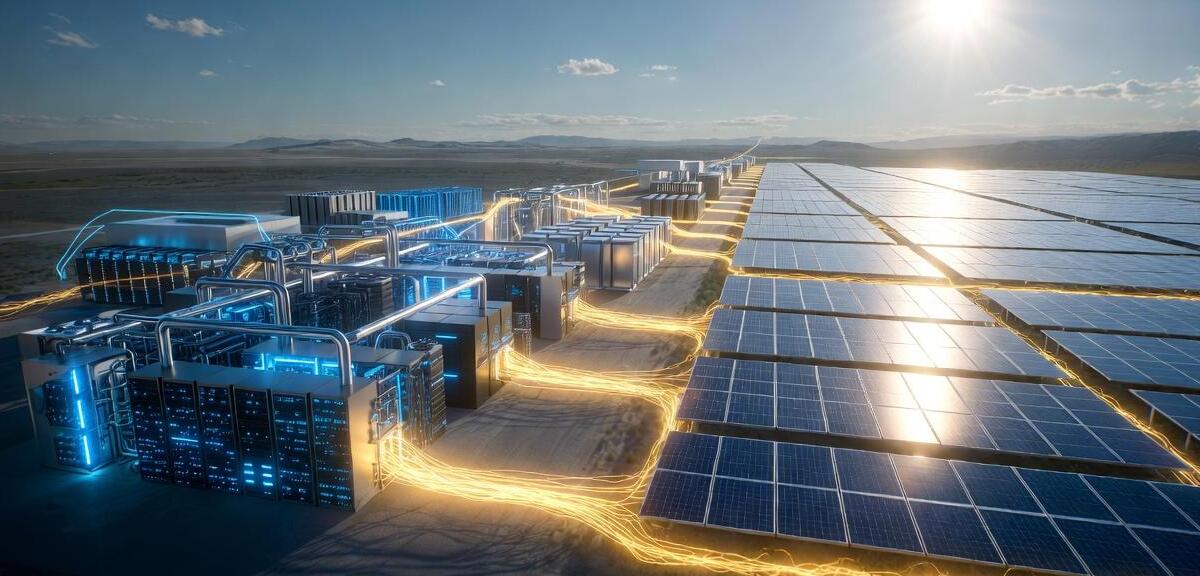
Google just spent $4.75 billion on a company that doesn’t write code or build servers. Alphabet is buying Intersect Power, a clean energy developer, because it turns out artificial intelligence has a very analog problem: it needs massive amounts of electricity, and there isn’t enough to go around.
The acquisition isn’t a side investment or a feel-good sustainability play. Google is securing its own power supply because waiting for utilities to catch up isn’t an option anymore. The company that organized the world’s information is now in the solar farm business.
The Problem Nobody Talks About
AI sounds clean. It’s software, after all. Just smart algorithms running in the cloud. Except those algorithms run on servers, thousands of them, burning through electricity at rates that would shock most people.
Training a large language model can use as much power as a small town consumes in weeks. Running AI features across Search, Gmail, and YouTube for billions of users? That’s a different scale entirely. Google’s energy use jumped 13% last year, almost entirely because of AI. Every new model, every new feature, every improvement adds to the bill.
Intersect Power builds solar farms and battery storage facilities in places like Texas and California. They also have a pipeline of projects that won’t be finished for years. Google isn’t just buying what exists today. They’re claiming a spot in line for power that hasn’t been generated yet.
Everyone’s Racing for the Same Thing
Microsoft made headlines by cutting a deal to restart a nuclear reactor at Three Mile Island. Amazon is investing in experimental reactor technology. Meta is building some of the largest solar installations in the country.
The new competition in tech isn’t about who has the best model or the smartest engineers. It’s about who can keep the lights on. Data centers running AI need 10 to 50 times more electricity than traditional facilities. In some parts of the country, the power grid is already maxed out.
Northern Virginia hosts more data centers than anywhere else on Earth. Last year, the region started turning down new projects. Not because of zoning issues or local opposition, but because there literally isn’t enough electricity available. Some companies are now choosing where to build based purely on which locations have power capacity. Everything else comes second.
What Happens When the Grid Can’t Keep Up
Google committed years ago to running entirely on carbon-free energy by 2030. That target is slipping further away every quarter. AI has reversed the company’s environmental progress faster than anyone expected.
Buying Intersect gives Google more than just megawatts. It gives them control. When a training run gets interrupted because of power issues, companies can lose weeks of work and millions in compute costs. Owning the generation side means fewer surprises.
A competitive angle most people miss: startups building AI models rent computing power from cloud providers like Google, Amazon, or Microsoft. Those providers buy electricity at market rates from utilities. But what if you generate your own power, run your own data centers, design your own chips, and train your own models? You’ve just cut out multiple layers of cost and complexity that your competitors still deal with.
The Intersect deal still needs regulatory approval, probably within six months. The company will keep existing contracts with other customers, but new capacity goes to Alphabet first. Google just bought a guaranteed spot at the front of the line for clean energy in multiple states.
The Real Constraint
Tech companies love talking about breakthroughs in AI capabilities. Faster models, better reasoning, more natural conversations. What they talk about less is the infrastructure required to make any of it work at scale.
You can have the most talented researchers in the world. You can design chips that are twice as efficient as anything else on the market. But if you can’t power the servers running those chips 24/7, you’re not in the game.
Energy availability is becoming the bottleneck that determines who wins in AI. Not funding, not talent, not even technology. Just access to reliable electricity.
Other companies will follow this path. The question is whether there’s enough power infrastructure left to buy, or if the race is already over for anyone who hasn’t secured their supply