

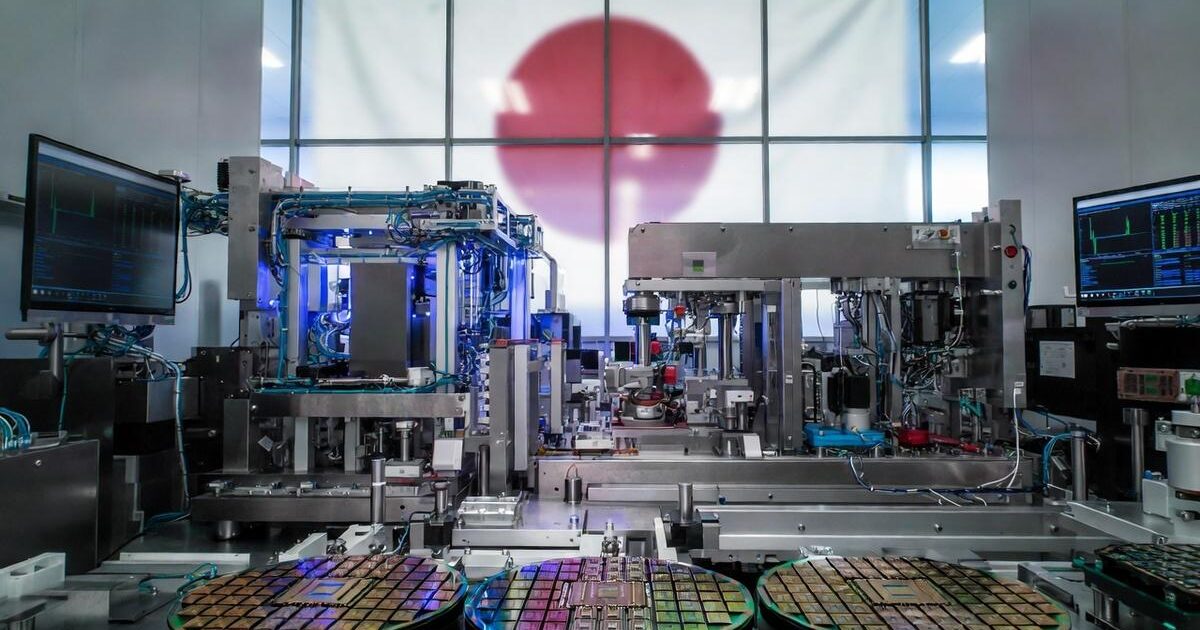
Japan plans to quadruple its semiconductor and AI development budget to 1.23 trillion yen (approximately $7.9 billion) beginning in the next fiscal year.
The substantial funding increase reflects Japan’s commitment to reclaiming its position in the global semiconductor industry. Once a dominant force in chip manufacturing during the 1980s and 1990s, Japan has seen its market share decline significantly over recent decades. This investment aims to rebuild domestic production capabilities and reduce dependence on foreign suppliers for critical technologies.
Strategic Push for Technological Independence
The expanded budget will support multiple initiatives across the semiconductor and artificial intelligence sectors. Funding priorities include advanced chip fabrication facilities, research and development programs, and partnerships with international technology companies. Japan has already attracted major investments from TSMC, which is building fabrication plants in Kumamoto with government support.
The timing aligns with global efforts to secure semiconductor supply chains following recent shortages that disrupted industries worldwide. Countries including the United States, European Union members, and South Korea have all announced similar programs to boost domestic chip production capacity. Japan’s approach combines direct subsidies for manufacturing facilities with tax incentives for research activities and equipment purchases.
Government officials have indicated the funding will target both mature chip technologies used in automotive and industrial applications, as well as cutting-edge processes below 5 nanometers. This dual approach aims to serve immediate market needs while building capabilities for future innovations.
Economic and Security Implications
Beyond economic considerations, the investment addresses national security concerns related to technology dependence. Modern defense systems, telecommunications infrastructure, and critical industries all rely on advanced semiconductors. Building domestic capacity reduces vulnerability to supply disruptions and geopolitical tensions.
The AI component of the budget targets both foundational research and practical applications. Japanese companies are working to compete with developments from the US and China in areas like generative AI, robotics, and automated manufacturing systems. Major corporations including Sony, Toyota, and NEC are expected to benefit from the increased funding, alongside emerging startups in the technology sector.
Analysts point out that Japan retains significant strengths in semiconductor materials and manufacturing equipment, even as its chip production capabilities have diminished. The new budget could help the country leverage these existing advantages while rebuilding end-to-end production capabilities.
Building the Future Workforce
Industry observers note that success will require not just financial resources but also attracting skilled talent and fostering innovation ecosystems. The Japanese government has indicated additional policy measures may follow to support workforce development and streamline regulatory processes for tech companies.
Universities are being encouraged to expand engineering and computer science programs, with particular emphasis on semiconductor design and AI specializations. Some industry partnerships will offer direct pathways from academic programs to employment in newly funded facilities.
This represents one of Japan’s largest single commitments to technology sector development in recent years. The results of this investment will likely shape the country’s competitive position in global technology markets for decades to come.