

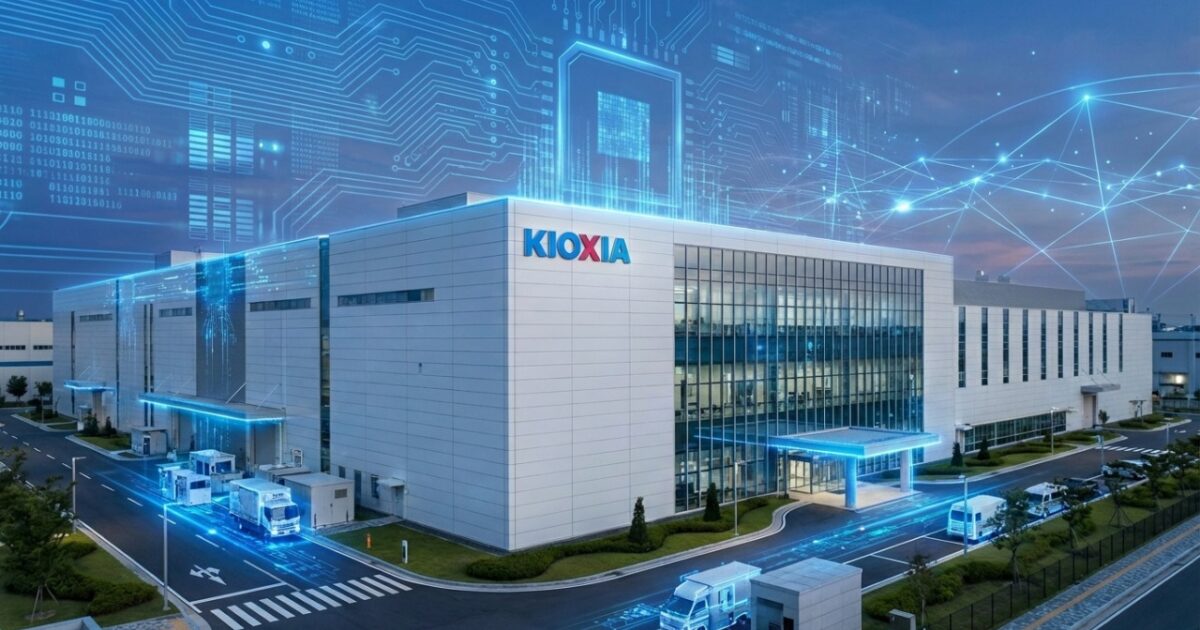
Japanese memory chipmaker Kioxia Holdings delivered the strongest stock performance on the planet in 2025. The company’s shares rose approximately 540 percent year-to-date. This performance outpaced every other member of the MSCI World Index.
Kioxia also became the top stock in Japan’s Topix benchmark for 2025. The NAND flash memory maker debuted on the Tokyo Stock Exchange just last December. The company’s market value now stands at roughly 5.7 trillion yen or about $36 billion.
According to Bloomberg, this impressive climb reflects artificial intelligence’s insatiable appetite for data storage. Despite recent market jitters, the AI boom remains alive and well.
What Kioxia Produces
Kioxia ranks among the world’s leading NAND flash memory chip producers. The company competes alongside Samsung and SK Hynix as one of the three biggest players in the sector. Apple and Microsoft count among its major customers.
NAND chips appear in devices ranging from smartphones to laptops. However, the real demand explosion comes from data centers. These chips are critical for AI training and data center operations.
The company’s BiCS FLASH 3D technology underpins its high-density storage solutions. Kioxia began expanding its Kitakami plant in 2025 to meet growing AI-related demand.
Why AI Demand Is So Strong
Hyperscalers are racing to build out AI infrastructure. This process pushed memory chip demand to record levels throughout the year.
Kioxia Executive Vice President Tomoharu Watanabe explained the situation to Bloomberg. Demand is especially strong from hyperscalers seeking NAND chips to support generative AI. A wave of customers looking to replace aging server infrastructure from five to six years ago also exists. Many are even struggling to source sufficient hard drives, indicating a broader demand surge.
Major tech firms warned of a memory supply crunch this year amid soaring demand. Analysts forecast a jump in prices. Market research firm TrendForce expects NAND flash prices to increase by 5 to 10 percent in the final quarter.
The company anticipates NAND storage demand will grow by roughly 20 percent each year. AI data center operators keep scaling up and this rapid expansion pace will continue.
Investor Expectations
The memory demand rush boosted Kioxia shares significantly. Investors anticipate solid demand and rising prices will drive the company’s revenue higher.
Amir Anvarzadeh, Japan equity strategist at Asymmetric Advisors, shared his outlook for 2026. In tech, they go into 2026 mainly geared to memory. This includes direct exposure to Kioxia or second derivative plays.
Chip wafer makers like Sumco are also expected to benefit from strong memory demand next year.
For investors exploring AI-related opportunities, check out our best AI stocks analysis.
Valuation Concerns
The stock’s stellar performance raised some concerns about overvaluation. These worries have also weighed on other AI-related shares in recent months.
Kioxia dropped 23 percent in a single day after its quarterly earnings undershot investors’ lofty expectations in November. The company missed the high bar that the market had set following its incredible run.
However, with memory demand still far outstripping supply, Kioxia looks well-placed to weather AI market jitters in 2026. Anvarzadeh noted the supply-demand imbalance provides a cushion against potential volatility.
Japan Market Context
Kioxia’s rally happened alongside a record-setting year for Japanese equities. The Topix index closed 2025 at 3,408.97, beating the 2,881.37 level last seen at the peak of Japan’s late-1980s bubble economy. The index rose 22 percent over the year, marking its third straight annual gain.
Global markets crashed significantly in April after President Donald Trump’s Liberation Day tariffs triggered worldwide selloffs. Japan recovered relatively quickly and hit new all-time highs by July as trade tensions eased.
In November, Japan announced about 18 trillion yen or $115 billion in additional stimulus funding. The package targeted 17 strategic industries including quantum computing and nuclear fusion. These moves reinforced long-term tech spending plans.
The Nikkei 225 closed at 50,339.48, its second straight record year end. Gains from major stocks drove a 26 percent annual rise, topping the Topix for a third consecutive year. Kioxia stood at the center of Japan’s strongest equity run in decades.
Memory Sector Outlook
The memory chip sector had been in a post-pandemic slump due to sluggish demand for smartphones and PCs. That trend reversed sharply this year as AI transformed data infrastructure requirements.
Kioxia makes investment decisions on a monthly basis to ensure its facilities can meet surging market needs. The company’s management remains confident the market will sustain rapid expansion for years ahead.
Micron Technology plays a similar role in the United States. Like Kioxia, Micron supplies NAND flash and SSD storage used in data centers, AI systems and consumer devices. Micron shares rose about 160 percent year-to-date compared to Kioxia’s 540 percent gain.
Together, Kioxia and Micron represent the leading edge of the global memory revival. As AI continues to transform data infrastructure, these companies are positioning themselves at the forefront of the next wave of digital innovation.