

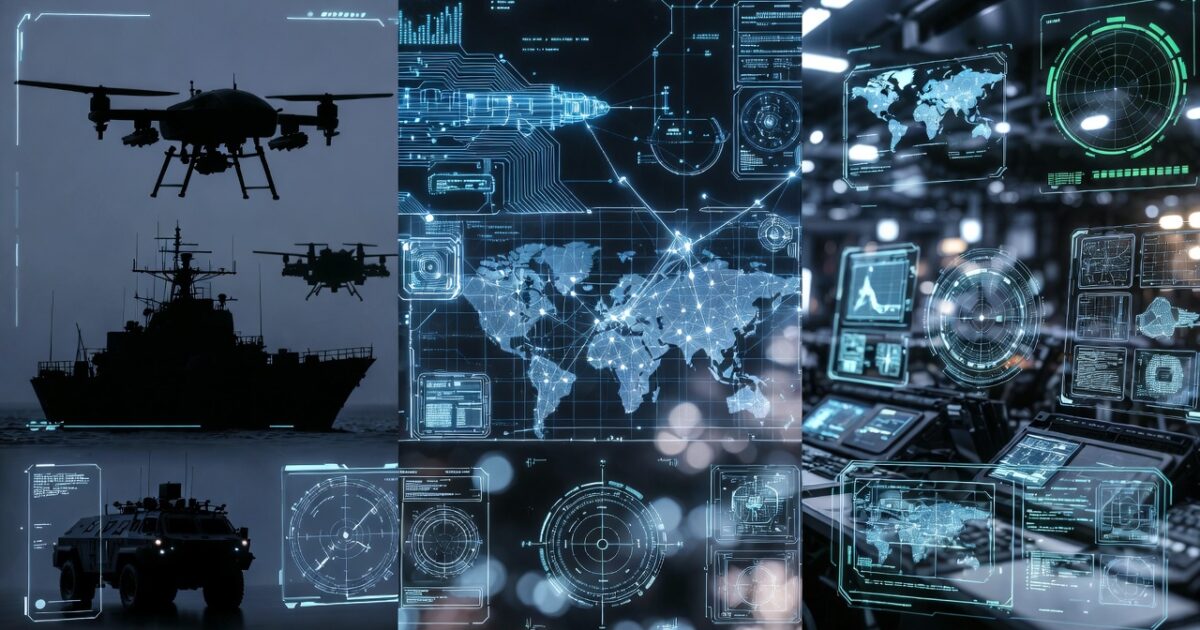
Armed forces globally accelerate integration of algorithmic systems across defense and security operations throughout 2025. The technology transforms military capabilities from intelligence analysis to autonomous platforms and strategic decision support.
This expansion reflects both technological maturation and intensifying geopolitical competition. Nations view advanced computational capabilities as essential to maintaining military advantage, driving substantial investment in research, development, and deployment despite ongoing debates about risks and ethical implications.
Intelligence and Surveillance Systems
Signal processing represents one of the most established military applications. Algorithms analyze communications intercepts, radar returns, and sensor data at speeds and scales impossible for human analysts. According to research from the Center for Strategic and International Studies, automated systems now process the majority of raw intelligence data collected by major military powers.
Image recognition capabilities enable rapid analysis of satellite imagery and reconnaissance footage. Systems identify military equipment, track troop movements, and detect changes in infrastructure or terrain. These tools help commanders maintain situational awareness across vast geographic areas.
Predictive analytics assist intelligence agencies in anticipating adversary actions. By identifying patterns in historical data, algorithms flag anomalies suggesting preparation for military operations, cyber attacks, or other hostile activities. Early warning systems provide time for defensive measures or diplomatic interventions.
Autonomous and Semi-Autonomous Platforms
Unmanned aerial vehicles increasingly incorporate autonomous navigation and targeting capabilities. Modern systems execute complex missions with minimal human oversight, adapting to changing conditions and making tactical decisions independently within pre-defined parameters.
Naval applications include autonomous vessels for mine detection, submarine tracking, and port security. These platforms operate in dangerous environments where human presence creates unacceptable risks. Endurance exceeds crewed alternatives, enabling extended patrols and persistent monitoring.
Ground-based systems range from logistics robots to experimental combat platforms. Automated supply vehicles reduce personnel exposure in contested areas. Armed systems remain controversial, with most militaries maintaining human control over lethal force decisions despite technical capabilities for full automation.
Cyber Operations and Defense
Algorithmic tools dominate modern cyber warfare. Attack systems probe networks for vulnerabilities, craft customized exploits, and execute intrusions faster than human operators. Defensive applications monitor network traffic for suspicious patterns, isolate compromised systems, and respond to threats in real-time.
The speed of cyber conflict increasingly exceeds human reaction times. Automated defenses become necessary to counter automated attacks. This dynamic creates arms race pressures as both offensive and defensive capabilities advance through iterative technical development.
Information warfare employs algorithms for generating and distributing propaganda, identifying influence targets, and tracking narrative spread across social media. The U.S. Department of Defense has acknowledged developing capabilities in this domain while emphasizing constraints around domestic operations and respect for civilian information environments.
Strategic Planning and Wargaming
Military planners use algorithmic simulations to test strategies and evaluate force structures. These systems model complex scenarios involving multiple actors, diverse capabilities, and uncertain variables. Running thousands of iterations reveals robust approaches that perform well across varying conditions.
Logistics optimization algorithms improve supply chain efficiency, particularly important for operations across vast distances or in austere environments. Systems coordinate transportation, predict maintenance requirements, and allocate resources to maximize operational readiness while minimizing costs.
Threat assessment tools synthesize intelligence from multiple sources to evaluate adversary capabilities and intentions. These analyses inform strategic decisions about force posture, alliance relationships, and investment priorities. Algorithmic support helps human decision-makers process enormous information volumes.
Command and Control Enhancement
Real-time data fusion integrates sensor feeds from satellites, aircraft, ships, and ground units into coherent operational pictures. Commanders view battlespaces with unprecedented clarity, understanding friendly and hostile positions, environmental conditions, and logistical status simultaneously.
Communication networks employ algorithmic routing to maintain connectivity despite jamming, physical damage, or contested electromagnetic environments. Mesh networks automatically reconfigure when nodes fail, ensuring information reaches intended recipients through available pathways.
Decision support systems present commanders with tactical options, estimate outcomes, and highlight risks. These tools augment rather than replace human judgment, providing analytical depth that might otherwise require extensive staff work and time unavailable in fast-moving situations.
International Competition and Cooperation
Major powers compete vigorously in military algorithm development. China invests heavily in autonomous systems and intelligent platforms. Russia emphasizes cyber capabilities and unmanned combat vehicles. The United States pursues advantages across multiple domains while maintaining extensive research programs.
Technology transfer concerns complicate international cooperation even among allies. Nations guard sensitive capabilities to prevent adversaries from developing countermeasures or replicating advanced systems. Export controls and classification requirements limit collaborative development despite potential efficiency gains.
Some areas see multilateral engagement. International humanitarian law discussions address autonomous weapons. Arms control negotiations consider how to verify compliance when systems can be rapidly reconfigured. These dialogues proceed slowly against technical advancement and geopolitical tensions.
Ethical and Legal Considerations
Autonomous lethal systems raise profound ethical questions. Many argue human judgment must remain in decisions to take life, even when algorithmic systems offer tactical advantages. Others contend that properly designed automated systems might make more consistent, rule-compliant choices than humans under combat stress.
International humanitarian law requires distinguishing combatants from civilians and ensuring proportional use of force. Whether algorithmic systems can reliably make these determinations remains disputed. Technical optimists believe engineering solutions will address concerns. Skeptics question whether context-dependent judgments can be adequately formalized.
Accountability presents additional challenges. When autonomous systems cause unintended harm, assigning responsibility among designers, commanders, and operators becomes complex. Legal frameworks developed for human combatants may not translate directly to automated decision-making.
Technical Limitations and Risks
Current systems remain vulnerable to various failure modes. Adversarial inputs can fool image recognition algorithms. Cyber attacks might compromise autonomous platforms. Environmental conditions may degrade sensor performance, causing mission failures or unintended engagements.
Dependence on algorithmic systems creates strategic vulnerabilities. Adversaries might target the computational infrastructure, communications networks, or data sources supporting military operations. Degrading these capabilities could paralyze forces adapted to algorithm-enabled operations.
Testing adequacy represents an ongoing concern. Combat environments differ from training conditions in unpredictable ways. Systems that perform well in simulations or controlled exercises might behave unexpectedly when deployed operationally. Verification and validation challenges scale with system complexity.
Workforce and Organizational Changes
Military organizations adapt structures and training programs to leverage algorithmic capabilities effectively. New specialties emerge around operating, maintaining, and developing advanced systems. Traditional military occupational specialties incorporate technical skills previously considered outside their scope.
Human-machine teaming requires new operational concepts. Commanders must understand system capabilities and limitations to employ them appropriately. Over-reliance on algorithmic tools creates risks, as does dismissing their insights. Finding optimal collaboration patterns demands experimentation and doctrinal development.
Recruitment and retention challenges arise as military services compete with commercial technology sector for technical talent. Compensation gaps and bureaucratic friction disadvantage defense organizations despite mission appeal. Creative approaches to accessing expertise include partnerships with academia and industry.
Budget and Investment Trends
Defense spending on algorithmic systems grows substantially across major military powers. Research programs explore emerging capabilities. Procurement budgets shift toward intelligent platforms and supporting infrastructure. Maintenance and upgrade costs increase as systems become more complex and software-dependent.
Cost-benefit calculations favor algorithmic solutions in many contexts. Unmanned platforms avoid personnel risks while often costing less than crewed alternatives. Automated analysis handles data volumes that would require prohibitive analyst staffing. Efficiency gains offset development and deployment expenses.
However, technology transitions create near-term costs. Legacy systems require continued support while new capabilities deploy. Integration challenges consume engineering resources. Training personnel and developing doctrine add to transition expenses before benefits fully materialize.
Looking Forward
Military algorithm applications will continue expanding as technology matures and operational experience accumulates. Systems currently in development will deploy through the late 2020s, further transforming defense operations. The strategic importance of computational capabilities ensures sustained investment despite economic pressures.
International dynamics remain uncertain. Competitive pressures might drive destabilizing developments as nations fear falling behind adversaries. Alternatively, shared concerns about risks could enable agreements limiting particularly dangerous applications. Outcomes depend on diplomatic efforts alongside technical trajectories.
Civilian technology development will continue influencing military capabilities. Commercial algorithms, sensors, and computing infrastructure provide foundations for defense applications. This dual-use character complicates export controls and technology security while offering economic efficiencies through shared research and production.
The transformation of warfare through algorithmic systems represents one of the defining military developments of the early 21st century, comparable to previous revolutions in mobility, precision, and information technology.