
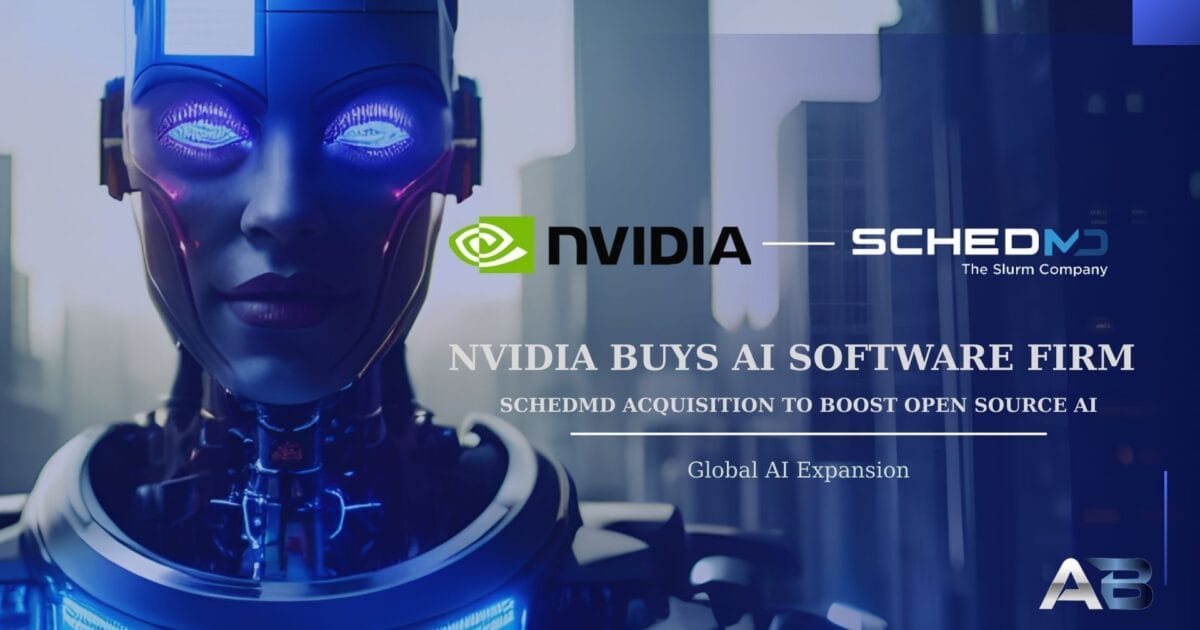
Monday’s Nvidia acquisition of SchedMD represents one of the clearest indicators of the company’s transformation from hardware focused origins to establishing dominance across the software ecosystem. The California mbased tech giant has secured one of the most critical components of AI infrastructure through this strategic move.
Why Slurm Matters in Modern AI
Founded in 2010 by Morris Moe Jette and Danny Auble, SchedMD employs approximately 40 people while serving major global players. Large scale infrastructure providers such as CoreWeave and the Barcelona Supercomputing Center are among the organizations benefiting from the company’s developed technologies.
SchedMD’s open-source workload manager, Slurm, plays a pivotal role in scheduling complex computing tasks across massive data centers. The system holds critical importance particularly in training and inference processes of generative AI models, ensuring efficient distribution of computational resources.
According to Nvidia’s statement, Slurm operates with full compatibility on the company’s latest hardware solutions and forms the foundational infrastructure of modern AI systems. Following the acquisition, the software will maintain its open-source character. Development and support processes will continue under Nvidia’s umbrella.
Market Response and Competitive Dynamics
Nvidia shares gained approximately 1.35% following the acquisition announcement. On the same day, the company unveiled a new generation of open source AI models that are faster, more cost efficient, and more capable than previous versions. This maneuver is interpreted as strategic positioning against increasing competitive pressure, particularly from Chinese open source AI laboratories.
Nvidia’s reputation built on high performance chips remains undisputed. However, investments in software have become increasingly notable in recent years. The company offers open source AI models spanning a wide spectrum from physics simulations to autonomous driving technologies, used extensively by researchers and enterprise customers.
Growing Ecosystem Under CUDA’s Shadow
At the center of Nvidia’s market dominance lies the proprietary CUDA platform, which tightly integrates software with hardware. Having become an industry standard among developers, this platform constitutes one of the fundamental pillars of the company’s competitive advantage. With the SchedMD acquisition, Nvidia aims to deepen hardware software integration even further.
In the current environment where the AI infrastructure market is rapidly expanding, Nvidia’s strategic moves reflect the company’s determination to preserve its leadership position. Support provided to the open source community also forms part of the strategy to expand the developer ecosystem and build a loyal user base.
Financial Details Remain Undisclosed
Financial terms of the deal were not revealed. However, industry analysts note that considering Slurm’s critical position in AI infrastructure, the strategic value of the acquisition far exceeds its financial dimension for Nvidia.
How Nvidia will integrate SchedMD technologies into its own ecosystem and sustain its commitments to the open source community will be closely monitored in the coming period. This move to strengthen the company’s position in the AI race could herald new acquisitions and partnerships across the sector.
Implications for the AI Landscape
The acquisition signals Nvidia’s comprehensive approach to controlling the entire AI stack from silicon to software. Industry experts suggest this vertical integration strategy could reshape how enterprises build and deploy AI infrastructure. As cloud service providers increasingly compete in the AI space, Nvidia’s ownership of critical scheduling infrastructure positions the company uniquely.
Furthermore, maintaining Slurm’s open source status while bringing it under corporate stewardship presents an interesting test case. The developer community’s response will likely influence how tech giants approach future open source acquisitions in the AI domain.