

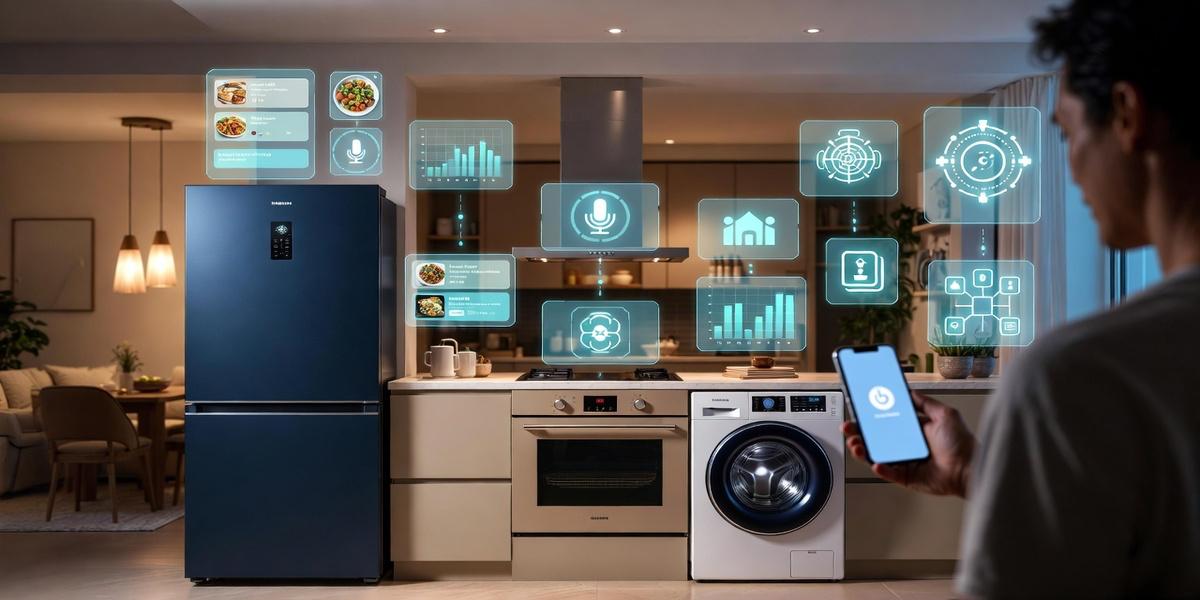
Samsung unveiled its “Bespoke AI” smart home vision at CES under the theme “AI for All: Everyday AI that Accompanies Your Life,” introducing new artificial intelligence-powered home appliances designed to create seamlessly connected living experiences.
The presentation reflects Samsung’s strategy to integrate AI across its consumer electronics portfolio, moving beyond smartphones and televisions into kitchen appliances, laundry machines, and climate control systems. The company positions AI not as a futuristic concept but as practical technology that adapts to daily routines, learns user preferences, and coordinates between devices to simplify household management. This approach addresses consumer demand for smart home technology that delivers tangible convenience rather than requiring technical expertise to operate.
Bespoke AI Product Ecosystem
Samsung’s Bespoke line has traditionally emphasized customizable design, allowing consumers to select colors and finishes matching their home aesthetics. The AI integration extends this personalization to functionality, with appliances that adjust operations based on household patterns and individual preferences. Refrigerators can suggest recipes based on stored ingredients, washing machines optimize cycles for fabric types automatically, and air conditioners learn preferred temperature settings for different times of day.
The interconnected ecosystem enables appliances to communicate and coordinate. A refrigerator detecting low milk inventory could add it to a shopping list accessible via smartphone. Cooking appliances might adjust settings when sensors detect someone entering the kitchen. Climate systems could modify heating or cooling based on occupancy patterns detected by smart home hubs.
Voice control through Samsung’s Bixby assistant provides unified command across devices, eliminating the need to interact with each appliance separately. Natural language processing allows conversational requests rather than memorizing specific commands. Users can ask about food expiration dates, laundry cycle status, or energy consumption without navigating individual device interfaces.
AI Capabilities and Learning Systems
Machine learning algorithms analyze usage patterns over time, improving recommendations and automations. Initial setup may require some user input, but systems become more autonomous as they gather data about household routines, preferences, and behaviors. This learning happens locally on devices when possible, addressing privacy concerns about cloud-based data processing.
Predictive maintenance represents another AI application. Sensors monitoring appliance performance can detect developing issues before failures occur, notifying users to schedule service or order replacement parts. This proactive approach reduces unexpected breakdowns and extends equipment lifespan through timely intervention.
Energy optimization algorithms help reduce utility costs by running appliances during off-peak hours when electricity rates are lower, or adjusting refrigerator temperatures based on door opening frequency and ambient conditions. Climate systems balance comfort with efficiency, learning which rooms require heating or cooling at specific times.
Smart Home Integration Standards
Samsung participates in Matter, the industry standard for smart home device interoperability developed by the Connectivity Standards Alliance. Matter compatibility means Samsung’s Bespoke AI appliances can work with products from other manufacturers supporting the protocol, reducing ecosystem lock-in that has historically limited smart home adoption.
Integration with popular voice assistants beyond Bixby, including Amazon Alexa and Google Assistant, provides flexibility for households already invested in particular smart home platforms. Users aren’t forced to choose between Samsung appliances and their preferred voice control system.
The SmartThings platform serves as Samsung’s smart home hub, coordinating devices and enabling automation routines that span multiple appliances and systems. Mobile apps provide remote monitoring and control, letting users check appliance status or adjust settings away from home.
Consumer Benefits and Use Cases
Practical applications demonstrate AI’s value beyond novelty. Parents can receive notifications when children arrive home from school based on smart door locks and security cameras. Meal planning becomes simpler when refrigerators track inventory and suggest recipes using available ingredients. Laundry systems that detect fabric types prevent damage from incorrect wash settings.
Accessibility features help users with disabilities or elderly household members. Voice control eliminates the need to physically interact with appliance panels that may be difficult to reach or read. Reminder systems can prompt medication schedules or alert caregivers to unusual activity patterns suggesting potential health concerns.
Energy dashboards provide transparency about consumption patterns, helping households identify opportunities to reduce utility costs. Detailed breakdowns showing which appliances use most energy enable informed decisions about usage habits or upgrade priorities.
Market Context and Competition
The smart home market has grown substantially but faces consumer skepticism about complexity, security, and interoperability. Many households own disconnected smart devices that don’t communicate effectively, limiting utility. Samsung’s integrated approach attempts to address these concerns by offering cohesive ecosystems from a single manufacturer.
Competitors including LG, Whirlpool, and newer entrants like GE Appliances are pursuing similar AI integration strategies. Differentiation comes from specific features, user interface design, pricing, and retail presence. Samsung’s global scale and brand recognition provide advantages, though success ultimately depends on delivering reliable functionality that justifies premium pricing.
Tech companies like Amazon and Google have entered the smart home space primarily through hub devices and voice assistants, partnering with appliance manufacturers rather than producing hardware themselves. Apple’s HomeKit ecosystem takes a similar approach. Samsung’s vertical integration across consumer electronics gives it unique positioning to control the entire experience from appliances to control interfaces.
Privacy and Security Considerations
AI-powered home appliances raise privacy questions about data collection and usage. Cameras in refrigerators, microphones for voice control, and sensors tracking household activity generate information that companies could potentially monetize or that hackers might target. Samsung emphasizes on-device processing where possible and encryption for data transmitted to cloud services.
Transparency about data practices helps build consumer trust. Clear explanations of what information devices collect, how it’s used, and who can access it allow informed decisions. Options to disable specific features or limit data sharing address privacy preferences while potentially reducing functionality.
Security updates for connected appliances present challenges since these products have much longer lifespans than smartphones. Commitments to provide security patches for extended periods protect consumers from vulnerabilities discovered after purchase. Automatic update mechanisms ensure devices remain protected without requiring user intervention.
Pricing and Availability
Premium positioning reflects the advanced features and AI capabilities. Bespoke AI appliances command higher prices than conventional models, targeting consumers willing to pay for convenience, customization, and cutting-edge technology. This strategy focuses on affluent markets initially, with potential for broader accessibility as manufacturing scales and component costs decline.
Financing options and trade-in programs help mitigate upfront costs. Retailers may offer bundle discounts for purchasing multiple appliances together, encouraging whole-home ecosystem adoption. Subscription services for extended warranties or premium AI features could provide recurring revenue while spreading consumer costs over time.
Regional availability varies based on market maturity, regulatory requirements, and local preferences. North America, Europe, and parts of Asia typically receive new products first, with expansion to other markets following if initial reception proves positive.
Future Development and Innovation
Samsung’s CES presentation likely previews broader product roadmaps extending beyond immediately available devices. Concept demonstrations of future capabilities help gauge consumer interest and attract media attention even for technologies years from commercialization.
Continued AI advancement will enable more sophisticated capabilities. Computer vision in refrigerators could automatically catalog contents without manual input. Natural language understanding might allow more complex requests like “prepare ingredients for dinner based on what we have” triggering multiple coordinated actions across appliances.
Integration with broader smart home systems including security, entertainment, and lighting creates opportunities for holistic automation scenarios. Arriving home could trigger sequences adjusting temperature, starting dinner preparation, and cueing preferred music or lighting based on learned preferences and schedule.
Industry Impact and Consumer Adoption
Samsung’s push into AI-powered home appliances validates the smart home concept’s mainstream viability. When major manufacturers commit significant resources to developing and marketing these technologies, it signals belief in substantial consumer demand rather than niche enthusiasm.
Adoption rates will reveal whether consumers find sufficient value in AI features to justify price premiums and accept privacy trade-offs. If Bespoke AI appliances succeed commercially, expect competitors to accelerate their own AI integration efforts. Conversely, tepid reception might indicate the market isn’t ready for these capabilities or that implementations don’t yet deliver compelling benefits.
The evolution from isolated smart devices to coordinated ecosystems represents the smart home’s maturation. Samsung’s vision of AI that “accompanies your life” frames technology as helpful rather than intrusive, adapting to humans rather than requiring them to adapt to technology. Whether this vision resonates with enough consumers to drive mass adoption remains the central question as these products move from CES showrooms to actual homes.