

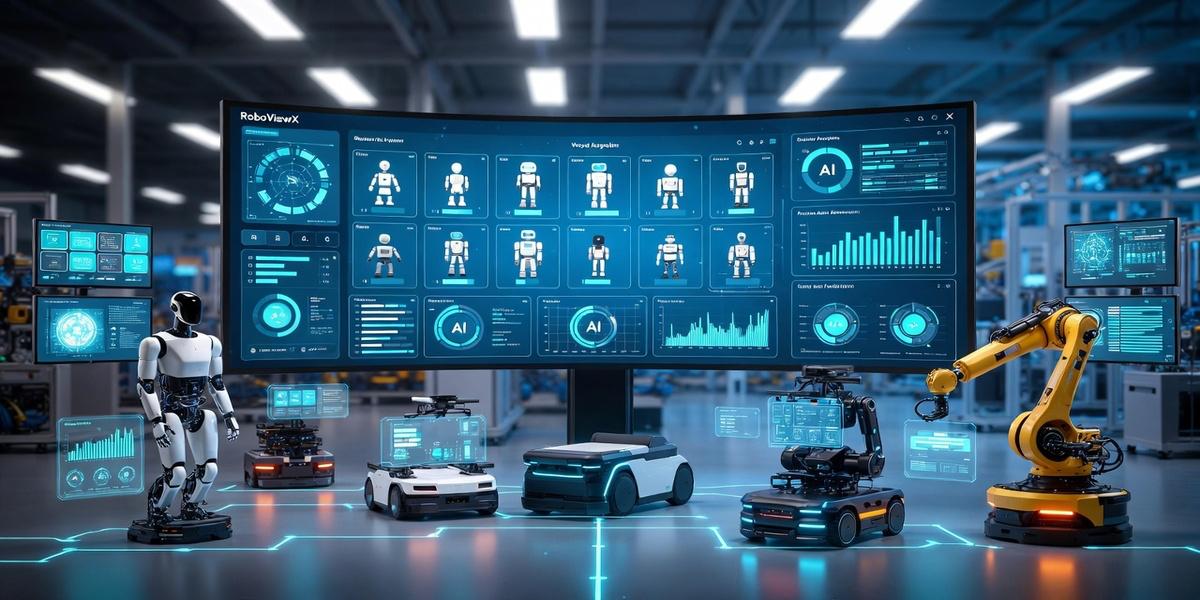
Spacebank will unveil its RoboViewX AI Robotics Control Platform at CES 2026, offering multi-robot control capabilities and real-time artificial intelligence automation.
The announcement positions Spacebank to showcase advanced robotics management technology at one of the world’s largest consumer electronics exhibitions. CES attracts thousands of companies demonstrating emerging technologies, making it a strategic venue for product launches targeting enterprise and industrial customers. RoboViewX addresses growing demand for unified control systems that can manage multiple robots simultaneously, a challenge facing warehouses, manufacturing facilities, and logistics operations as they scale automation deployments.
Platform Capabilities and Features
RoboViewX enables operators to control multiple robots from a single interface, eliminating the need for separate management systems for each robotic unit. The platform supports real-time coordination, allowing robots to work together on complex tasks that require synchronization. This capability proves particularly valuable in environments where different robot types must collaborate, such as warehouses where autonomous mobile robots, robotic arms, and sorting systems operate simultaneously.
The AI automation component analyzes operational data continuously, optimizing robot behavior based on changing conditions. Machine learning algorithms identify patterns in workflow efficiency, equipment performance, and task completion rates. The system then adjusts robot parameters automatically to improve productivity without human intervention.
Real-time processing represents a key technical achievement. Traditional robot management systems often rely on centralized servers that introduce latency, limiting responsiveness. RoboViewX processes control commands and sensor data with minimal delay, enabling faster reaction to dynamic situations like obstacles, equipment failures, or priority changes.
Market Context and Competition
The robotics control platform market has expanded rapidly alongside industrial automation adoption. Companies including ABB, KUKA, and newer entrants like Viam and Formant compete in this space, each offering different approaches to robot fleet management. Spacebank enters a competitive but growing market where differentiation depends on technical performance, ease of integration, and pricing models.
Enterprise customers face significant challenges when deploying multiple robots from different manufacturers. Proprietary control systems often don’t communicate effectively, forcing operators to manage each robot type separately. Unified platforms that provide vendor-agnostic control address this pain point, potentially commanding premium pricing if they deliver genuine interoperability.
CES serves as an important venue for B2B technology announcements despite its consumer electronics focus. The exhibition attracts enterprise buyers, investors, and media covering industrial automation trends. Companies use CES to generate awareness before pursuing direct sales channels for commercial products.
Technical Implementation and Integration
RoboViewX likely employs standard robotics protocols like ROS (Robot Operating System) or proprietary APIs to communicate with different robot models. Supporting multiple communication standards proves essential for broad compatibility. The platform must translate between various data formats and control schemas that different manufacturers use.
Cloud connectivity probably enables remote monitoring and control, allowing operators to manage robots across multiple facilities from centralized locations. This architecture requires robust cybersecurity measures to prevent unauthorized access to industrial systems. Security features typically include encrypted communications, multi-factor authentication, and audit logging of all control actions.
Integration with existing enterprise software represents another consideration. Warehouse management systems, manufacturing execution systems, and ERP platforms need data about robot operations for inventory tracking, production scheduling, and maintenance planning. APIs that facilitate these connections increase RoboViewX’s value proposition by fitting into broader operational technology stacks.
Application Scenarios
Warehouse automation presents an obvious use case. Facilities deploying autonomous mobile robots for goods movement, robotic arms for palletizing, and automated sorting equipment benefit from unified control that optimizes the entire system rather than individual components. RoboViewX could coordinate these different robot types to minimize idle time and maximize throughput.
Manufacturing environments face similar coordination challenges. Assembly lines increasingly incorporate collaborative robots working alongside human operators, plus traditional industrial robots performing repetitive tasks. Managing these mixed environments requires systems that understand both robot capabilities and human safety requirements.
Logistics operations at ports, airports, and distribution centers represent additional target markets. These facilities handle high volumes with tight deadlines, making efficiency gains from better robot coordination particularly valuable. Real-time adaptation to changing conditions like weather delays or volume spikes could provide competitive advantages.
Company Background and Strategy
Details about Spacebank’s history, funding, and previous products would provide context for evaluating RoboViewX’s prospects. New entrants with limited robotics experience face credibility challenges when competing against established industrial automation companies. Conversely, startups sometimes achieve technical innovations that incumbent vendors struggle to match due to legacy system constraints.
The CES launch strategy suggests Spacebank seeks visibility beyond traditional industrial automation channels. Consumer electronics media coverage reaches different audiences than specialized robotics publications, potentially attracting investors, partners, or customers who wouldn’t encounter the company through conventional industry forums.
Pricing and business model details will significantly impact market reception. Subscription-based pricing has become common for industrial software platforms, providing recurring revenue while lowering initial adoption barriers. Per-robot licensing, usage-based fees, or enterprise site licenses represent alternative approaches, each with different implications for customer economics and vendor revenue predictability.
Industry Trends and Outlook
Robot deployments continue accelerating across industries as technology costs decline and capabilities improve. Labor shortages in many regions drive automation investments as companies struggle to fill positions for repetitive or physically demanding work. This macro trend creates favorable conditions for robotics platform providers.
Interoperability has emerged as a priority for enterprise buyers tired of vendor lock-in. Industry consortia are developing standards for robot communication and control, though adoption remains incomplete. Platforms demonstrating genuine multi-vendor compatibility position themselves advantageously as customers prioritize flexibility over single-vendor solutions.
AI integration represents the current frontier in robotics development. Earlier generations relied on pre-programmed behaviors with limited adaptability. Modern systems incorporating machine learning can improve performance over time and handle situations not explicitly programmed. This evolution increases robot utility but also raises complexity, making management platforms more valuable.
What to Watch at CES
The Las Vegas convention will provide opportunities to evaluate RoboViewX through live demonstrations. Effective robot control platforms must prove reliability and responsiveness in real-world conditions, not just controlled environments. Demonstration quality often predicts market reception, as enterprise buyers discount products that appear underdeveloped or unreliable.
Partnership announcements could signal market traction. Integrations with major robot manufacturers or enterprise software providers validate technical approach and increase distribution reach. Strategic relationships often matter as much as underlying technology for B2B platforms.
Customer testimonials or pilot program results would strengthen Spacebank’s credibility. Industrial buyers typically require proof of concept deployments before committing to full-scale implementations. Companies that can present quantified results from existing installations face fewer sales objections.
The robotics control platform market offers significant opportunity for companies that successfully address multi-vendor coordination challenges. Spacebank’s CES debut will test whether RoboViewX delivers meaningful advantages over existing solutions and resonates with potential customers evaluating automation strategies.