

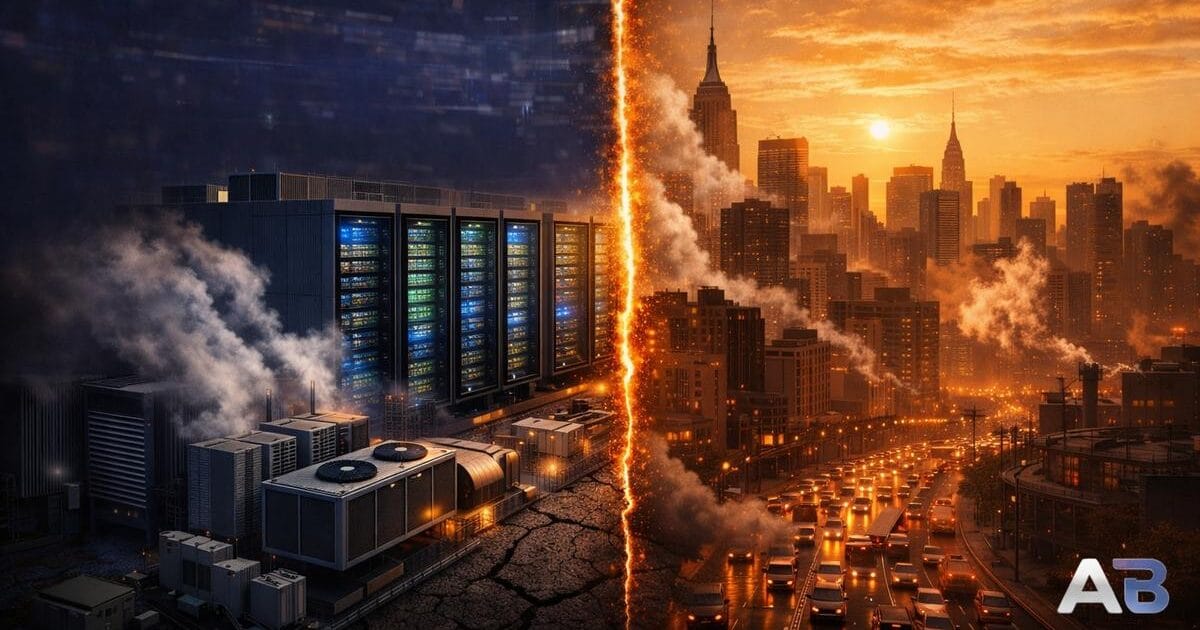
While the digital revolution promises a more efficient world, its physical backbone is beginning to weigh heavily on the planet. Recent environmental audits have unveiled a startling comparison: the cumulative energy requirements and carbon output of the world’s leading data centers have now reached parity with the total emissions of several global metropolises.
This shift marks a turning point in the conversation around “Green Tech.” What was once a marginal concern regarding server efficiency has evolved into a global infrastructure challenge that pits the desire for rapid innovation against the reality of a warming climate.
A Metropolitan Scale of Energy
The sheer scale of modern computational power is difficult to visualize. To keep global neural networks running, massive clusters of hardware operate 24/7, requiring cooling systems and power grids that mirror the utility needs of cities like Chicago or Berlin.
According to research highlighted by the International Energy Agency (IEA), the intensity of these operations is largely driven by the shift from simple storage to complex, generative processing. Unlike traditional internet usage, these advanced workloads require an exponentially higher “electricity per request” ratio, leading to localized energy spikes in technology hubs across the globe.
The Shift Toward Ecological Accountability
As the public and regulatory bodies demand more transparency, the industry is moving toward a model of “responsible scaling.” This isn’t just a PR move; it is a necessity for long-term operational survival.
Current trends in sustainable architecture include:
- The “Zero-Waste” Data Center: Utilizing the massive heat generated by server racks to provide district heating for nearby residential communities.
- Algorithmic Pruning: A movement within the software community to create “thinner” models that achieve the same results with a fraction of the hardware strain.
- Geographic Placement: Moving infrastructure to regions where renewable energy sources like geothermal or hydroelectric power are abundant, reducing the reliance on carbon-heavy grids.
The Innovation Paradox
There is a profound irony at the heart of this energy crisis. Many of the systems consuming this power are the very tools being used to solve climate change, designing more efficient carbon-capture tech or optimizing global supply chains to reduce waste.
The challenge for the coming years is not to slow down progress, but to ensure that the “brainpower” of our digital age does not come at the cost of the planet’s breath. As we move forward, the metric for success is shifting: it is no longer just about how fast a system can think, but how little it leaves behind.