
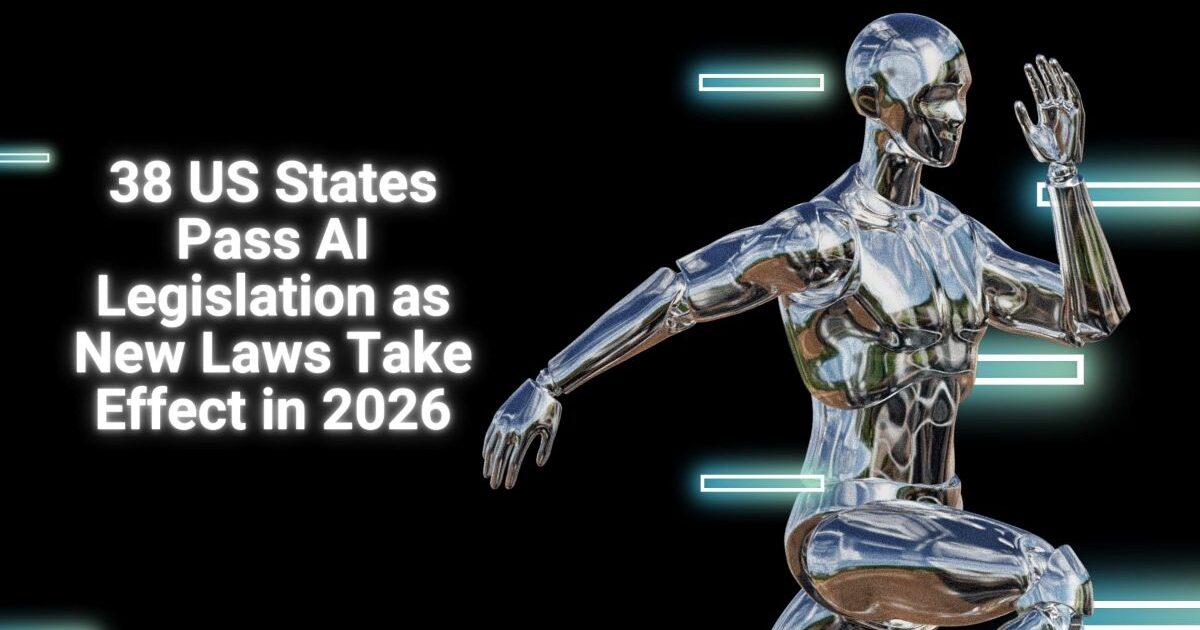
As the calendar turns to 2026, a sweeping array of state laws addressing artificial intelligence, healthcare access, and voting rights will take effect across the United States. The legislative activity reflects states stepping into regulatory voids left by congressional gridlock, with 38 states passing AI-related legislation alone during 2025, according to the National Conference of State Legislatures.
States Lead on AI Regulation Despite Federal Pushback
The new regulations tackle everything from preventing AI-generated deepfakes in political campaigns to restricting how medical chatbots identify themselves to patients. Meanwhile, millions of Americans face doubled health insurance premiums as federal subsidies expire, and stricter voting laws implemented in 20 states will reshape electoral processes heading into the 2026 midterm elections.
Thirty-eight states enacted artificial intelligence legislation in 2025, addressing concerns ranging from electoral integrity to medical misinformation. The legislative surge comes despite President Trump’s December executive order attempting to establish “minimally burdensome national policy” and limit state-level AI regulation.
Tim Storey, CEO of the National Conference of State Legislatures, emphasized that states have assumed leadership on AI policy in the absence of federal action. “States have taken the lead, as they have in so many issues,” Storey said at a recent briefing. “AI is the big one.”
Trump’s executive order, issued after Congress failed to pass comprehensive AI legislation, lacks the constitutional authority to preempt state laws. Only congressional legislation can override state regulations, leaving the patchwork of state AI policies intact for now.
Targeting Deepfakes and Medical Chatbots
California passed legislation prohibiting AI developers and businesses from creating the impression that patients are interacting with licensed healthcare professionals when they’re actually conversing with chatbots. Oregon enacted similar measures preventing AI programs from using the title “nurse” when dispensing medical advice.
These laws address growing concerns about AI systems providing medical guidance without proper disclosure of their non-human nature. As healthcare chatbots become more sophisticated and conversational, the risk of patients mistaking automated responses for professional medical advice has increased substantially.
Montana and South Dakota implemented laws requiring disclosure of deepfake usage in elections, measures that will apply during the 2026 midterm campaigns. Deepfakes, which are digitally altered images, video, or audio creating false representations of people’s statements or actions, have already caused confusion in recent elections.
During the 2024 presidential election, according to NBC News, a political consultant used AI to create a robocall impersonating President Joe Biden, instructing New Hampshire Democrats not to vote in the primary. Congress has yet to pass federal legislation addressing deepfake content that could mislead voters.
Paid Family Leave Expands to Three More States
Maine, Delaware, and Minnesota will implement paid family and medical leave policies in 2026, joining several states already providing such benefits. Maryland, Vermont, and Washington passed legislation expanding or amending existing paid family leave programs, with Washington’s changes taking effect this year.
Paid family and medical leave allows employees to receive wages when taking leaves of absence for medical reasons, childbirth, or family caregiving. While federal law provides up to 12 weeks of unpaid job protection for medical or caretaking leave, the United States remains the only developed economy without paid parental or medical leave at the national level.
Minnesota state Sen. Alice Mann, a physician who sponsored her state’s paid leave bill, said witnessing patients forced to choose between healthcare and paychecks motivated her legislative efforts. “I see people every single day who struggle,” Mann said. “People are left with the choice of taking care of themselves, their family members, their new baby and not getting a paycheck anymore.”
Minnesota’s legislation, passed in 2023, required time before implementation to educate stakeholders. The state conducted a $5 million public information campaign to inform “employers and community groups on what this policy is, what it does and how you participate,” according to Mann.
Delaware’s and Maine’s policies, passed in 2022 and 2023 respectively, also become effective in 2026. Mann expressed optimism that other states would follow suit, noting the policy’s popularity and sustainability.
Healthcare Costs Surge as Obamacare Subsidies Expire
All 50 states will experience rising healthcare costs starting in January after Congress failed to extend expiring Affordable Care Act premium subsidies before year’s end. Colorado became one of few states taking action to mitigate the impact, dedicating $100 million during an August special session to offset premium increases in its state healthcare exchange.
State Rep. Kyle Brown, who sponsored Colorado’s legislation, characterized the $100 million as “a bridge” for 2026, cushioning the blow from lapsed federal subsidies. “Before we passed the bill, people’s premiums on average were expected to go up by 175% in Colorado,” Brown explained. “We passed the bill, and now they’re only going up by 100%.”
According to KFF, a health policy research group, Affordable Care Act premium payments will likely more than double due to expiring subsidies. In Colorado, premiums for approximately 225,000 people will increase by an average of 101%, according to the state Insurance Division.
Brown said he initially hoped Congress would extend the subsidies but lost confidence after watching the federal government shut down for six weeks last fall, the longest federal funding lapse in U.S. history, as lawmakers deadlocked. “It feels like states are on their own,” Brown said. “We don’t have a willing partner in the federal government anymore.”
Rising healthcare costs and overall cost of living are expected to dominate the 2026 midterm election discussions.
Voting Restrictions Reach Highest Level Since 2021
Twenty states passed 37 bills restricting voting access and elections in 2025, the most since 2021, according to the Voting Rights Lab, a nonprofit tracking voting and election-related legislation. Meanwhile, 23 states passed 51 bills intended to improve voting and elections, the fewest such measures since the organization began tracking state legislation.
Kansas and North Dakota eliminated grace periods for mail-in ballots postmarked by Election Day but arriving afterward. Eight states passed legislation restricting or eliminating alternatives to photo ID as proof of voter registration.
Chris Vasquez, director of legislative tracking at the Voting Rights Lab, said many states may have been influenced by Trump’s March executive order pushing for broad changes in U.S. election conduct. The order aimed to require proof of citizenship for voter registration and mandated mail-in ballots arrive before Election Day.
While the proof-of-citizenship requirement was blocked in U.S. District Court in Washington as executive branch overreach, certain states passed legislation mirroring other executive order policies. “We did see 27 states introduce some sort of restrictive proof-of-citizenship legislation this year, which is triple what we saw in the previous legislative session,” Vasquez said.
Looking ahead to 2026, Vasquez will monitor state redistricting and a related Supreme Court case that could limit the Voting Rights Act’s scope. “I think, especially looking at the Supreme Court potentially really curtailing the ability of plaintiffs to bring Voting Rights Act claims in federal court, these state voting rights acts are essentially something to keep an eye on,” he said.
Federal Vacuum Drives State Action
The breadth of state legislative activity in 2025 reflects a broader pattern of states filling regulatory gaps left by federal inaction. Whether addressing AI governance, healthcare access, or voting procedures, state governments have assumed responsibility for policy areas traditionally subject to federal oversight or coordination.
This trend creates both opportunities and challenges. States can tailor policies to local preferences and act more quickly than Congress. However, the resulting patchwork of regulations complicates compliance for businesses operating across multiple jurisdictions and creates potential inequities in citizen rights and protections depending on residence.
As 2026 begins, the tension between state-level innovation and calls for national standards will likely intensify. How this balance evolves, particularly regarding AI regulation and voting rights, will significantly influence American governance and the 2026 midterm elections. For now, states remain in the driver’s seat, crafting policies that will shape daily life for millions of Americans in the year ahead.