

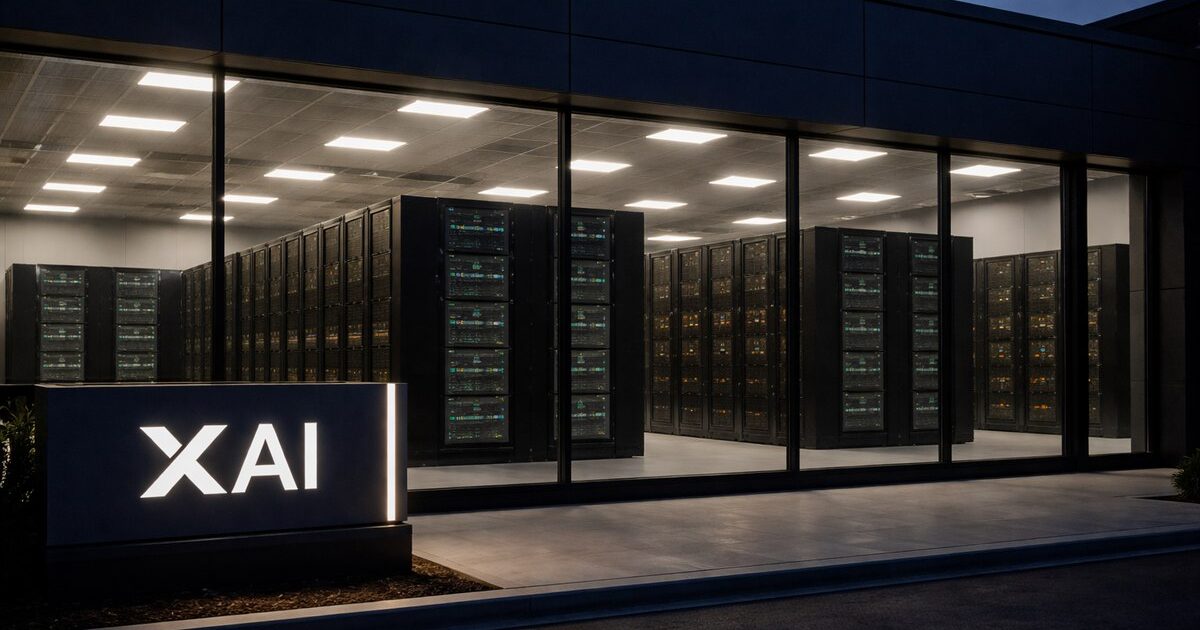
Elon Musk’s artificial intelligence venture, xAI, has acquired a third building as part of its ongoing effort to expand training capacity and strengthen its computing backbone.
The new facility is expected to support additional GPU clusters and high density infrastructure, allowing xAI to scale model training and inference workloads more efficiently. The move signals a continued focus on vertical control over compute resources at a time when access to advanced hardware remains a key constraint across the sector.
Scaling Infrastructure for Model Development
By adding another dedicated site, xAI is positioning itself to handle larger training runs and more frequent model iterations. Control over physical infrastructure enables tighter optimization across hardware, networking, and energy usage, an increasingly important factor for teams building frontier-scale systems.
Industry observers note that compute availability, rather than algorithms alone, has become the primary bottleneck for progress in large models.
Competitive Context
The expansion places xAI in more direct competition with established players such as OpenAI and Anthropic, both of which continue to invest heavily in large scale training infrastructure through partnerships and custom deployments.
While xAI remains earlier in its lifecycle, its infrastructure-first approach suggests a long term strategy focused on independence and rapid experimentation.
Broader Industry Implications
The acquisition highlights a broader trend among leading AI companies: securing physical compute assets rather than relying solely on shared cloud capacity. As demand for high-performance accelerators grows, ownership and proximity of infrastructure are becoming strategic advantages.
More details on xAI’s research direction and deployment plans are expected to emerge in the coming months.